Checking whether a white T-shirt is see-through
Coverage depends on knit, tension and light as well as weight. Check the shirt as a single layer.
Unfold it before deciding
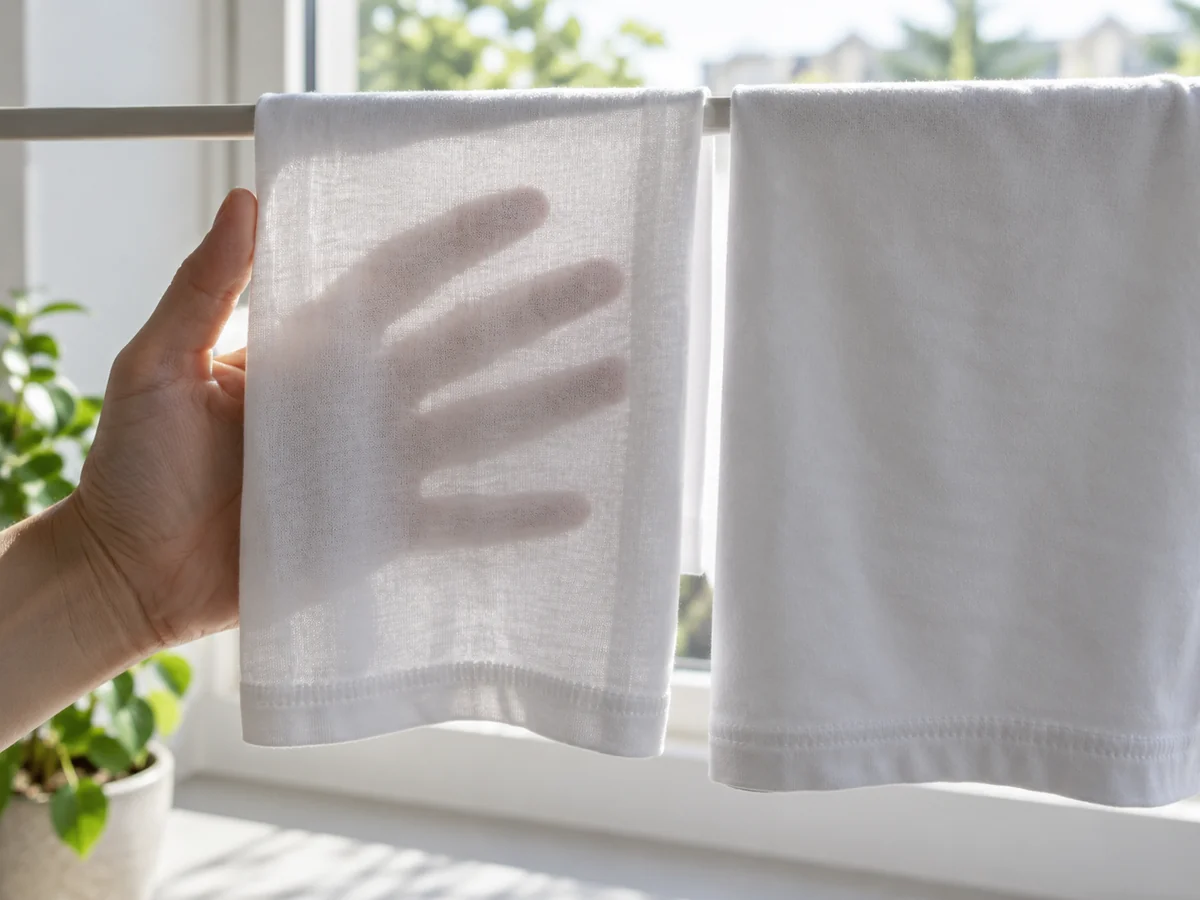
A white tee can look reassuringly opaque while folded on a shelf. Several layers are concealing whatever lies underneath. Open it out and assess one layer in ordinary light. If trying it on is possible, that is more useful than holding a thick folded stack against your hand.
Coverage changes with the conditions around the fabric. A shirt may look different in a dim changing room, beside a window and outdoors. Backlighting can exaggerate transparency. You do not need to judge it under an extreme spotlight unless that reflects how you will use it, but a daylight check can prevent surprises.
Look where the fabric is stretched
The chest, shoulders and upper back can place jersey under more tension than the loose fabric at the waist. Stretching can open the structure and make underlying contrast easier to see. If the shirt is close fitting, assess those areas rather than judging only the hem. A looser size might improve coverage there, but it also changes the whole silhouette.
Fabric weight gives a clue to substance, yet it is not a complete opacity rating. Knit density, yarn and finishing also matter. A heavier tee may still reveal a dark underlayer, while a well-chosen lighter fabric might provide enough coverage for your purposes. Compare the actual garments whenever possible instead of setting a universal minimum GSM.
Printed areas can complicate the impression. A solid graphic covers part of the chest but leaves the surrounding white fabric unchanged. Large artwork may draw your attention away from transparency in a product photograph. Look at the plain sections, especially the back, before concluding that the whole shirt offers the same coverage.
Plan the underlayer as part of the outfit
If you wear an undershirt or other undergarment, try the combination you intend to use. Contrast often matters more than whether both pieces are called white. A bright white underlayer can create a distinct outline beneath a softer white tee. Choose what works for your skin tone, comfort and preferred degree of visibility rather than following one colour rule.
Pay attention to edges and seams as well as colour. A raised edge can show through fabric that otherwise gives good coverage. Conversely, a smooth underlayer may work with a shirt that initially looked unsuitable. The practical goal is an outfit you are comfortable wearing, not proving that the tee passes an abstract test.
When buying remotely, seek an unretouched-looking front and back view and a clear fibre and weight description. Ask a direct question if opacity is essential. Photographs alone cannot guarantee the result under your lighting and fit, so keep the return conditions in mind before removing labels or washing.
Further information