Wash a graphic shirt with less friction
Protect the printed surface by planning the load, not by hoping a delicate setting fixes everything.
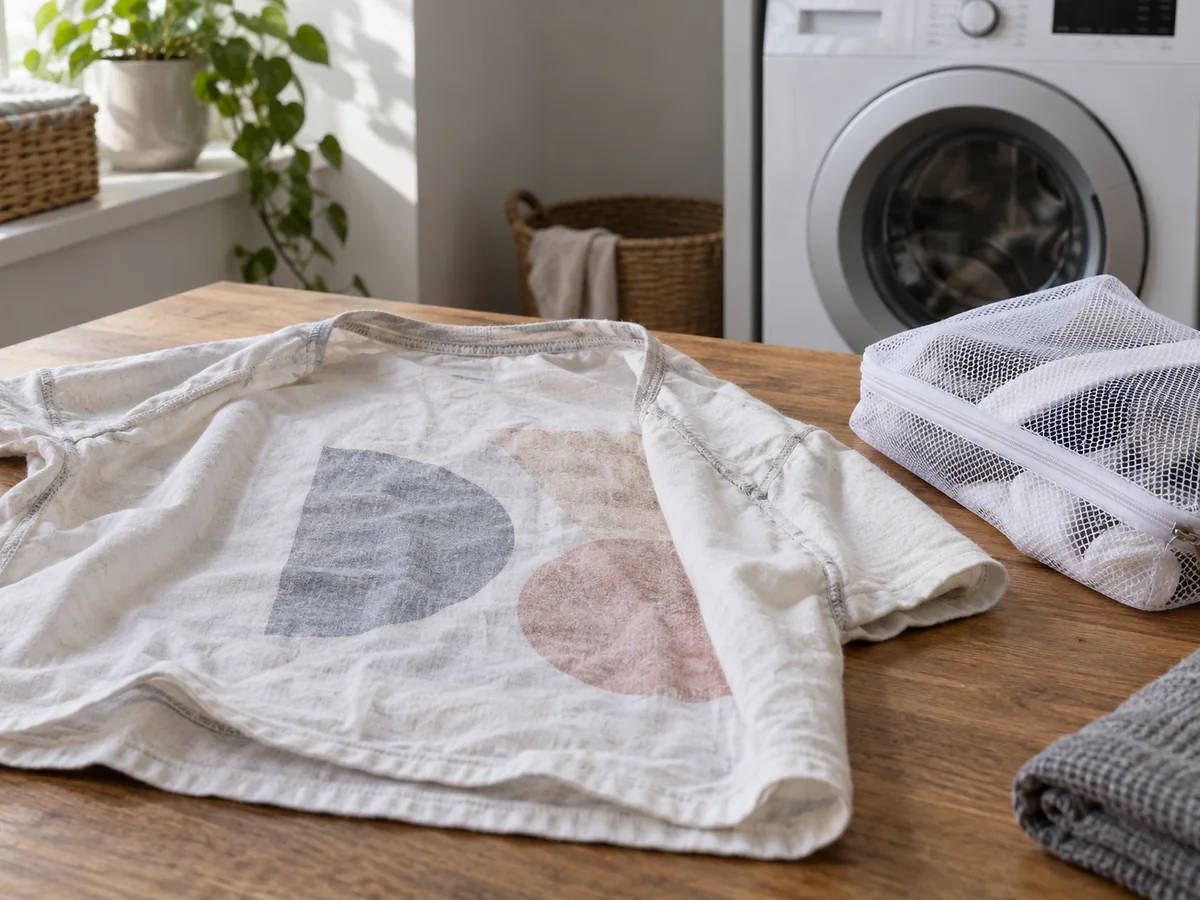
Read the garment and the decoration together
A graphic shirt contains two things that need to survive the wash: the fabric and the applied design. A plain cotton tee and a cotton tee carrying a transfer need not have identical care instructions. Start with the label sewn into the garment, then check any separate instructions from the printer. Where one allows harsher treatment than the other, use the more restrictive compatible method.
Do not assume a design is screen printed because it looks opaque, or that every soft-feeling image is the same ink. If the print method is unknown, there is little benefit in experimenting with hot water, aggressive stain treatments or a long soak. Ask the maker when the instructions are unclear, especially for a valuable or irreplaceable shirt.
Reduce the rubbing inside the drum
Turn the shirt inside out before loading it. This puts the printed face on the inside, where it has less direct contact with the drum and the outside of neighbouring garments. It is a useful precaution, not a promise that an already cracked or poorly attached design will become stable.
Choose companions carefully. A load of soft, similarly coloured shirts is a different environment from one containing open zips, hooks and rough workwear. Close fasteners on suitable items and keep abrasive pieces in another load. Leave enough space for the garments to move and rinse; packing the drum tightly is not a gentle substitute for doing a second wash.
Use the detergent dose appropriate to the machine, water hardness and load size. Pouring extra detergent directly over the artwork is not a more targeted clean. Treat a mark on unprinted fabric according to the care instructions and the stain product label, testing a hidden area first. Avoid scrubbing the printed surface with a brush.
Finish the job while it is still damp
If the instructions permit a cold gentle wash, that is a reasonable choice for a normally soiled printed tee. A cooler programme does not compensate for leaving wet clothing bundled in the drum afterwards. Remove the shirt promptly, support it while damp and smooth the fabric into its usual shape without pulling hard at the graphic.
Drying deserves the same attention as washing. Follow the stated method, and avoid placing an uncertain print against a hot radiator or pressing an iron directly onto it. Some printed shirts allow a low tumble setting; others prohibit tumble drying altogether. The decoration and the garment label determine the choice.
When the shirt is dry, inspect rather than pick at any lifted edge. Stop using a treatment that seems to make the image tacky, brittle or discoloured. Keeping a favourite shirt in rotation is often a matter of removing unnecessary friction and heat at each ordinary wash, rather than adding a special product after damage appears.
Further information