A travel cup lid has more than one seal
The outer gasket and the drinking closure do different jobs. Check the whole lid before trusting a travel cup inside a bag.
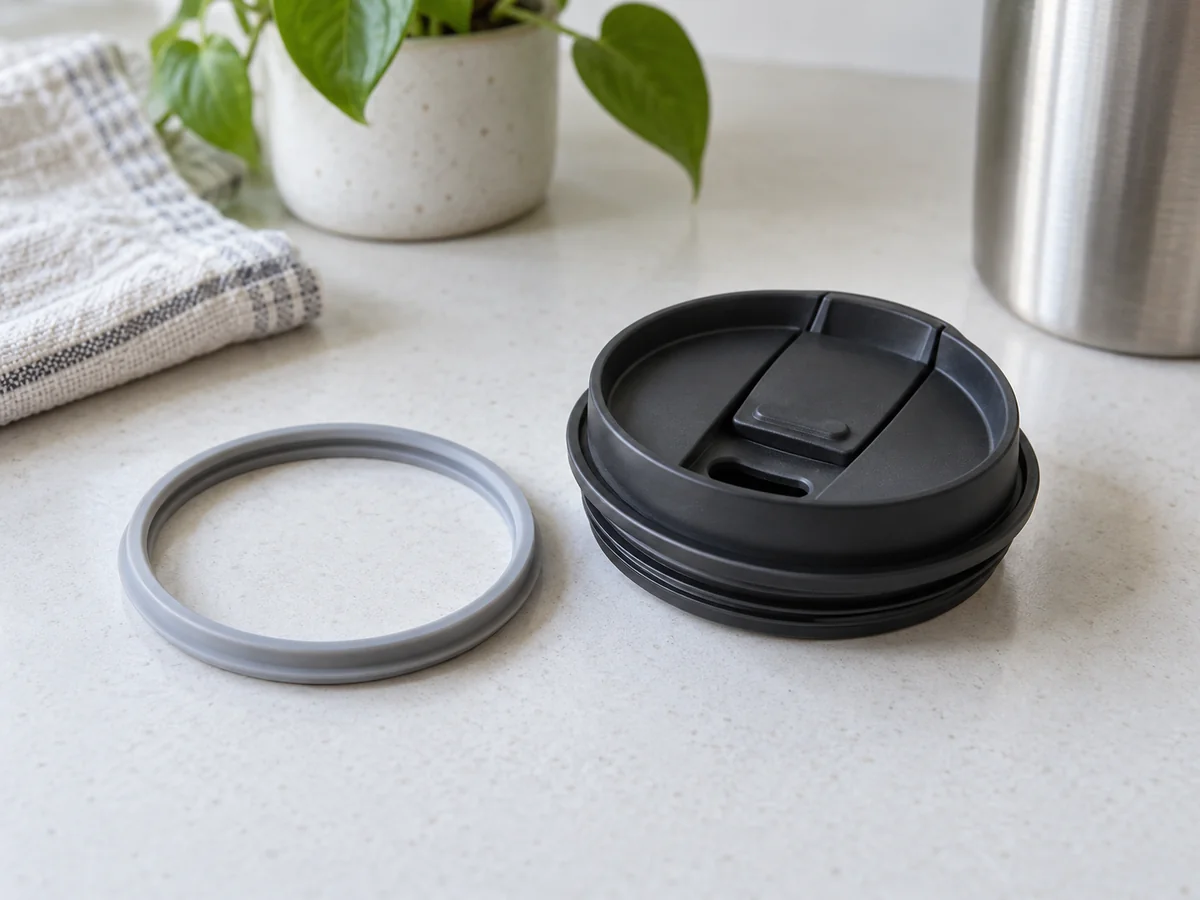
Follow the route a drink could take
A travel cup lid can have a seal around its outside edge and a separate closure over the drinking opening. Some lids also contain a vent, a slider or a removable mechanism underneath. One well-fitted gasket does not mean the whole assembly is leakproof. Read how the manufacturer describes the complete cup: a splash-resistant lid may be intended for upright use rather than loose transport among books and electronics.
Before first use, learn how the lid comes apart and goes back together using the supplied instructions. Work with an empty, cool cup on a clear surface. Do not force a fixed component out because a similar-looking lid in a video was removable. Small differences between models can change the cleaning method, the order of assembly and the way a seal should sit.
Check the ring and its groove
A removable silicone ring should be seated in the intended groove, without a twist or a section caught under the lid. Look for trapped debris, a tear or a missing part. More tightening does not necessarily solve a misplaced gasket, and forcing threads can damage the closure. If a seal has stretched or deteriorated, use a replacement specified for that model rather than a ring that merely seems close in size.
Cleaning is part of checking the fit. Residue can collect beneath a removable seal and around the drinking mechanism. Wash only the components and in the way the maker permits, rinse them and let them dry before reassembly. Keep a small diagram or the instruction page available until the order feels familiar. A complicated lid is a poor match if you will not realistically clean its hidden parts.
Use a cautious first check
If the product is explicitly rated for the position you intend to carry it, check the assembled cup with cool water over a sink according to its instructions. Keep it away from electrical equipment during that check. A successful cool-water check can reveal an obvious assembly problem, but it is not a guarantee against all future leaks or a substitute for the maker's temperature and use limits.
Consider how the closure will behave in a crowded bag. An exposed button or slider may be moved by neighbouring items, even when it closes properly on the table. Carry upright where required and leave room around the mechanism. Inspect the lid regularly rather than waiting for a leak to announce a worn seal. The useful travel cup is the one whose complete closure you understand, can maintain and can use within the conditions it was designed for.