Spot-clean a bag without making a tide mark
A small mark calls for controlled moisture and a tested method, not an expanding circle of stronger cleaning attempts.
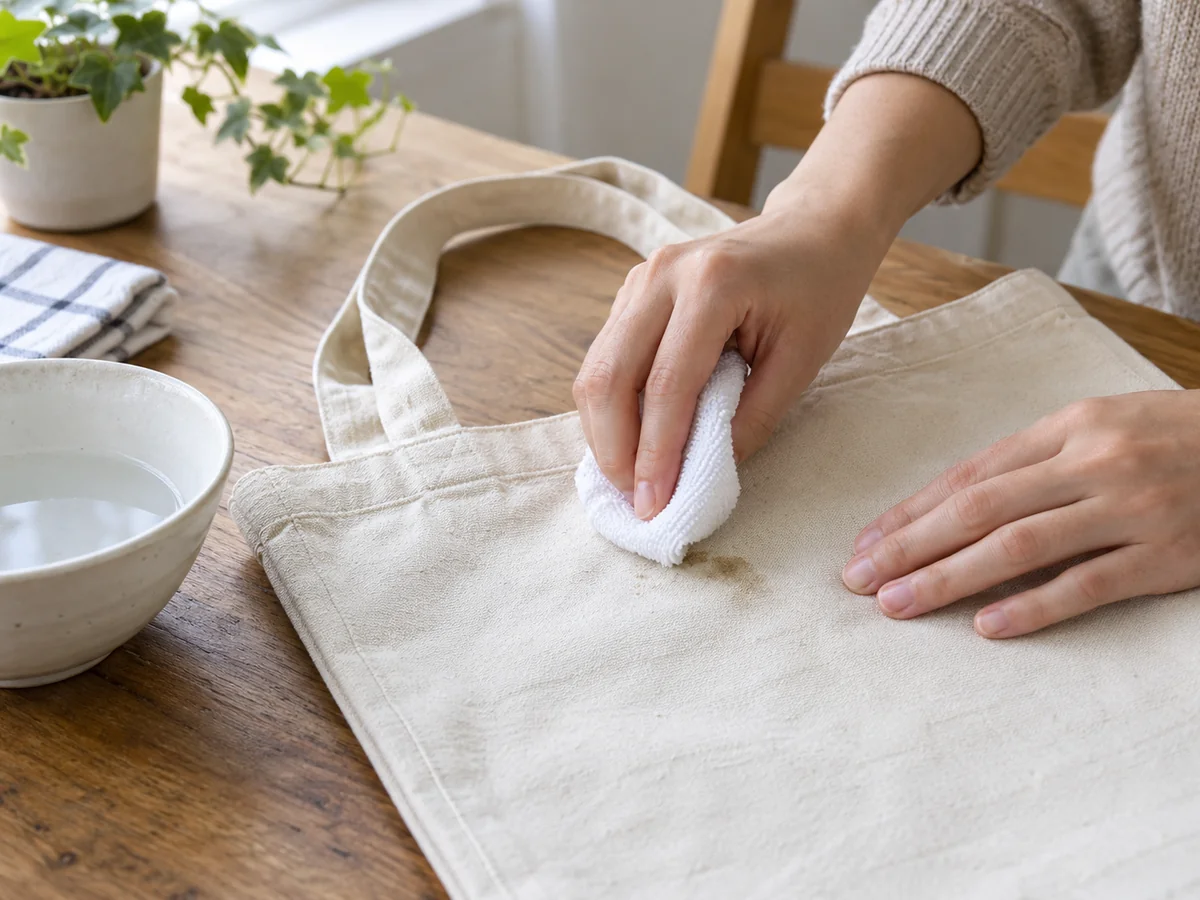
Identify the mark and the material
A dry dusty patch, an oily spot and a coloured drink spill do not call for the same response. Start by checking the bag's care instructions and the material around the mark. A pale canvas panel beside dark trim needs particular caution because moisture can move beyond the original stain. Remove the contents so you can see what is happening on the reverse.
If loose material can be lifted gently without spreading it, remove that first. Do not rub grit into the weave. For a fresh spill, blot with an appropriate clean cloth rather than chasing it across the panel. Avoid vigorous pressure that forces the liquid farther into padding or lining.
Test, wait, then work modestly
Use only a cleaning method compatible with the bag's instructions. Test it in a small concealed area and let that area dry fully. You are checking for colour transfer, a changed texture and a visible edge, not merely whether the wet cloth looks clean. A method that appears harmless while damp can still leave a mark after drying.
Apply a small amount with a clean, pale cloth rather than pouring solution onto the bag. Work gently and avoid saturating seams or the edge of a print. Change to a clean section of cloth as material transfers. If the cloth picks up the bag's own dye, or the finish changes, stop.
Remove permitted cleaning residue as the instructions require, using controlled moisture. Extra detergent left in the fabric can become another visible patch. Do not add several household products in succession or mix them together; that makes the result harder to predict and can affect the fabric or decoration.
Dry before deciding whether to repeat
Support the bag in its normal shape and allow airflow around the treated area. Keep it away from unapproved direct heat. Look at the panel only after it is fully dry, including the inside. A damp patch naturally looks darker and is not proof that cleaning has failed.
A tide mark can form when dissolved dirt or colour moves towards the boundary of a wet area. If one appears, resist enlarging the wet circle repeatedly without a plan. Check with the maker or a cleaner experienced in the bag's materials. More moisture is not automatically the answer, particularly for a structured bag that prohibits immersion.
Accept that some stains cannot be removed safely at home. A faint mark on a useful tote may be preferable to a damaged print, distorted panel or bleached patch. Careful spot cleaning is successful when it improves the bag without creating a larger problem, even if it does not make every sign of use disappear.