Canvas weight is only part of a sturdy bag
Fabric weight helps describe a tote, but seams, handles and empty weight deserve the same attention.
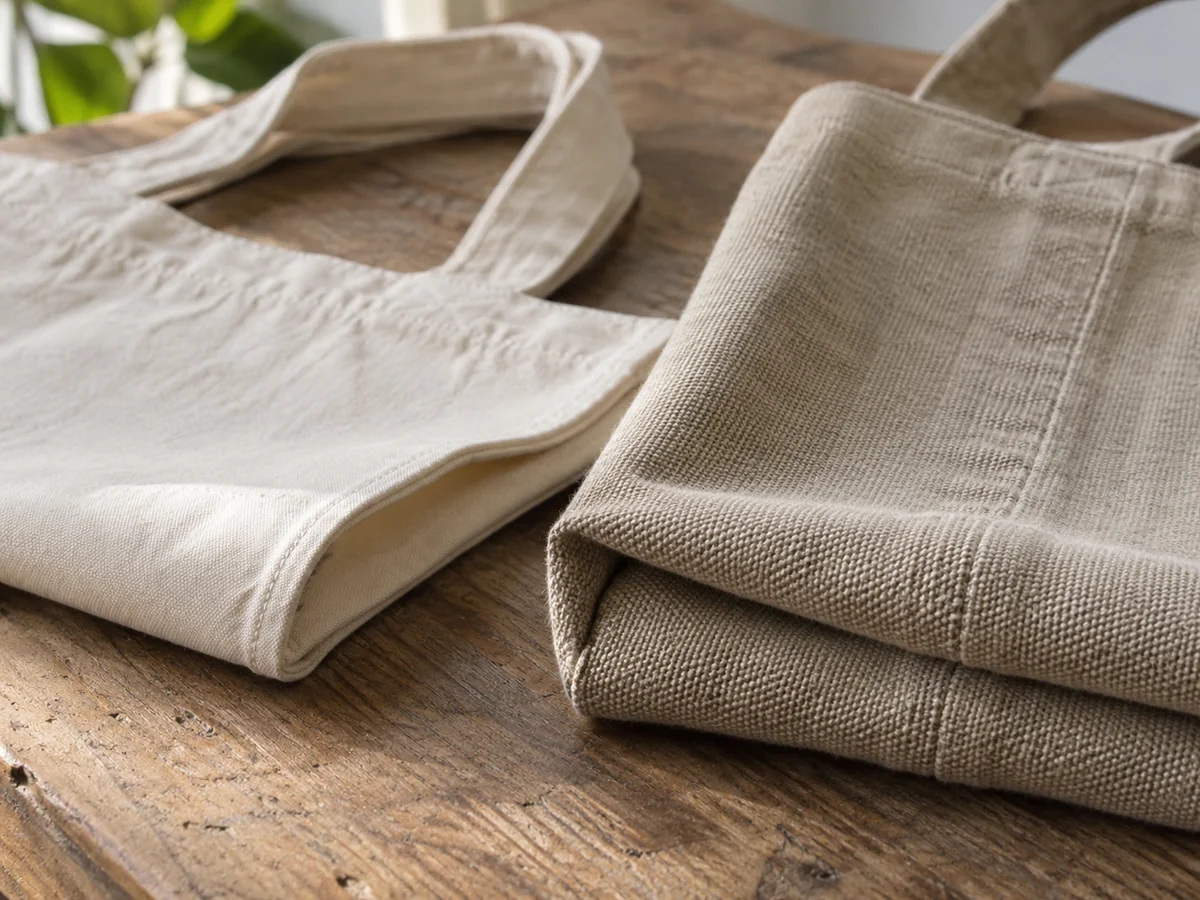
Read the number as a fabric description
Canvas weight is often presented in ounces per square yard or grams per square metre. It describes how much a given area of fabric weighs, rather than how much the finished bag can safely carry. A higher number can indicate a more substantial cloth, but it does not reveal every part of the weave, the quality of the stitching or the strength of the handle attachment.
This distinction matters when a listing places a bold fabric figure beside words such as “heavy duty.” A dense body can still have weak seams or narrow handles that feel uncomfortable with groceries. Conversely, a lighter cloth may make a practical everyday bag when it has suitable construction and is used within its stated limits. Judge the complete object instead of turning fabric weight into a load rating.
Follow the load through the bag
Imagine lifting a filled tote. The contents press against the base; the body transfers that weight towards the handles; the stitching holds those handles in position. Inspect the places where these parts meet. A reinforced base and well-executed handle seams are useful details to see clearly in photographs. Loose threads, puckering or uneven stitching deserve a closer look, especially around points that will repeatedly bend.
Handles that extend down the body may distribute forces differently from short tabs attached only near the rim, but appearance is not a substitute for a maker's testing. Avoid assuming one construction is indestructible. Ask whether a carrying limit is supplied and what the bag was designed for. A tote made for a notebook and a cardigan should not be treated like equipment for moving heavy tools.
Remember the weight you carry before packing
Thick canvas has its own mass. A large tote with a double base, lining and hardware can feel substantial while empty. Add a bottle and several books and the difference becomes obvious. If the bag is intended as an emergency shopping spare, easy folding and a low empty weight may matter more than a crisp, upright shape. For carrying craft materials between nearby rooms, structure might be more useful.
Feel the cloth as well as reading the specification. Some canvas is stiff and holds a boxy shape; another fabric with a similar weight feels softer because of its construction or finish. Consider how it folds against your hip and whether its edges rub your clothes. A bag that looks satisfyingly robust on a shelf still needs to be comfortable during an ordinary walk.
Care instructions also belong in the comparison. Printed panels, coatings, trims and reinforcement can change how a canvas tote should be cleaned. Do not infer machine washability from the fibre name or thickness. Choose enough structure for the things you genuinely carry, then check the seams, handles and care label with equal attention. That gives the fabric number a useful place without letting it decide everything.
Further information