Vinyl and paper stickers behave differently
The face material, finish and adhesive all matter. A material name alone does not tell you where a sticker belongs.
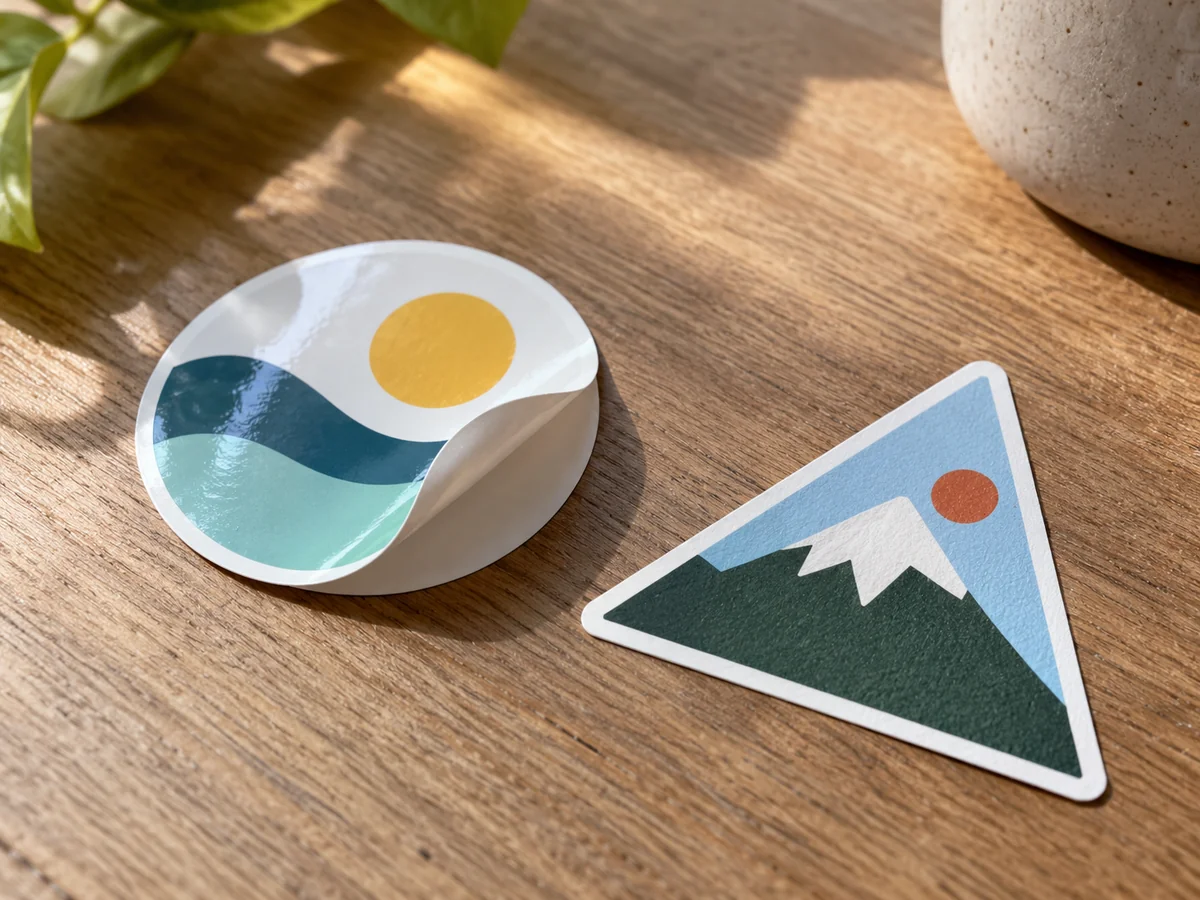
Three choices hidden in one small item
When a sticker curls at the edge or turns cloudy after washing, the artwork is rarely the whole explanation. The face material, printed finish and adhesive work together. Paper and vinyl are useful starting descriptions, but they do not specify the complete construction. A coated paper label can resist splashes, while a vinyl sticker may still have restrictions on heat, prolonged immersion or the surface it can attach to.
Think about the job first. A paper sticker used to close a gift envelope needs to look good for a short journey and may be intended to tear when opened. A sticker on a reusable bottle faces handling, condensation and cleaning. The same design can be suitable for one purpose and irritating for the other. Ask for the stated use conditions instead of assuming the thicker-looking option will survive everything.
What paper brings to the choice
Paper can have a pleasing texture and may be easy to write on, depending on the coating. That makes it useful for labels, notebooks and packaging. A heavily coated finish can change how a pen behaves, so test an appropriate pen on a spare label if writing matters. Let the ink dry before touching it rather than judging the material by a quick smudge.
Avoid broad recycling promises based on the word paper. The coating, adhesive, backing sheet and local collection rules can all affect disposal. If that is important to your purchase, look for information about the particular product and the separate parts. A recyclable face does not necessarily make the release liner suitable for the same bin. It is better to have a clear limited claim than an impressive but unexplained green label.
What to ask about vinyl
Vinyl often suits objects that need a flexible, more water-resistant label, but check whether the printing is protected and whether the product is intended for outdoor use. Sunlight, rubbing and the edge of a sticker can create different stresses. A waterproof claim does not automatically establish dishwasher suitability. Follow the sticker maker's instructions and the care limits of the object underneath it.
Finally, choose the adhesive deliberately. Permanent and removable describe different intentions, and clean removal depends on the recommended surface and conditions. For a borrowed object or something with a delicate finish, a permanent sticker is an avoidable gamble. Read the full description, buy a small quantity when unsure and keep a spare for a trial on a suitable non-valuable surface. The best material is the one that meets the actual task without asking the sticker to do more than its construction allows.