What outdoor-rated stickers still need
An outdoor rating needs context: surface, weather, sunlight and cleaning all affect how a sticker wears.
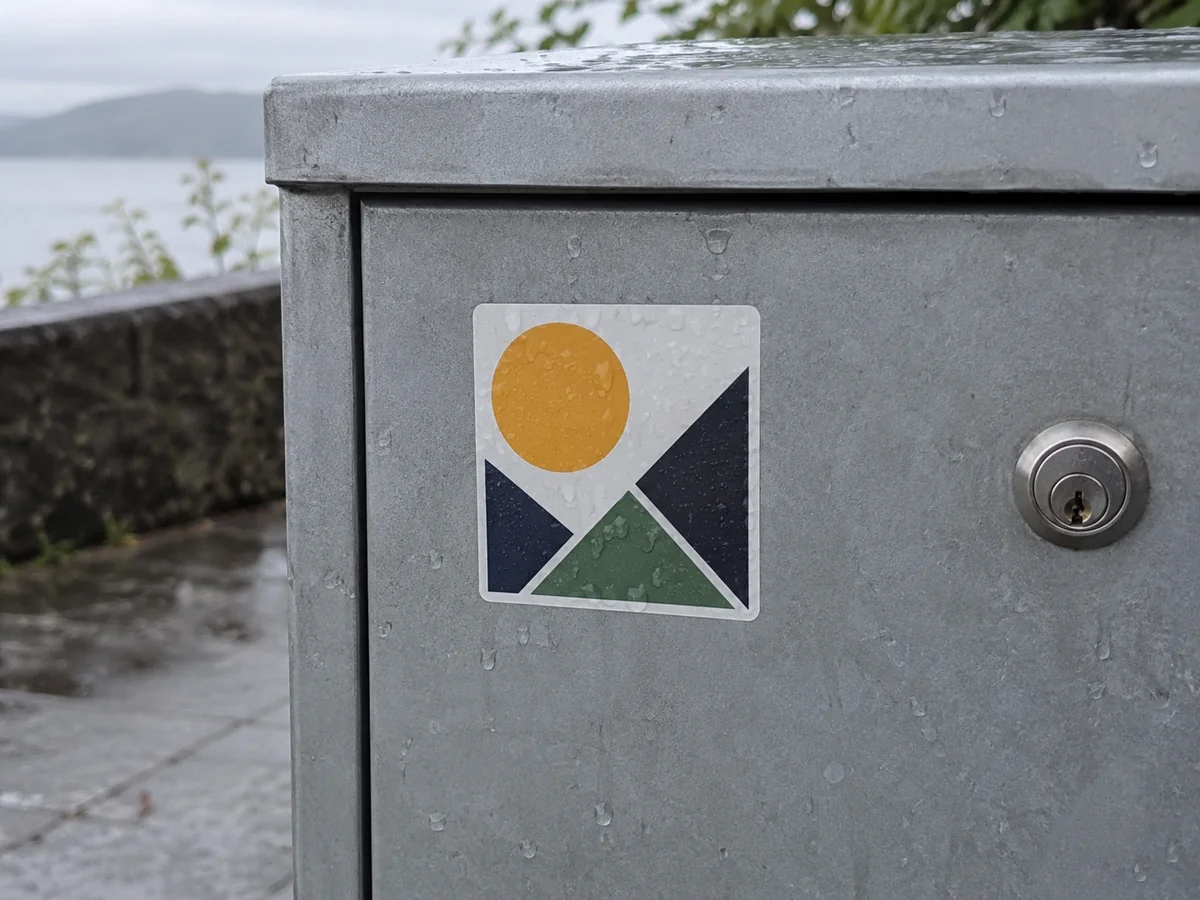
Read the claim in full
Outdoor-rated can mean that a sticker has been designed to resist weather under specified conditions. It does not mean that every combination of sun, salt, abrasion and cleaning has the same result. Look for the manufacturer's explanation of water resistance, fade resistance and expected use. If a lifespan is quoted, check the conditions attached to it rather than treating it as a promise for any location.
A sheltered sign and a bicycle frame are different environments. One may stay nearly untouched; the other can meet grit, rain, rubbing and regular washing. The surface underneath matters too. An adhesive intended for smooth painted metal may not suit textured plastic or a flexible fabric bag. Start by matching the product's recommended substrate and exposure to your intended use.
Edges usually deserve more thought
Place a sticker away from points that bend, scrape or receive constant contact. A design that spans a panel gap or crosses a sharp curve has more opportunities to lift. On equipment, keep ventilation, moving parts and required markings uncovered. A decorative sticker should not obstruct instructions, visibility or any part needed for safe operation. When unsure about an item of equipment, ask its manufacturer before applying anything.
Prepare the surface using compatible cleaning instructions and let it dry. Follow the sticker maker's application temperature and waiting period before weather exposure. Avoid applying a decal to a cold, wet object and assuming the first sunny day will fix the bond. A little patience at this stage is easier than trying to rescue grit beneath a lifting corner later.
Keep washing within the rating
Waterproof and dishwasher-safe are separate claims, and outdoor use does not automatically establish either one. Cleaning pressure, heat and detergent can place stresses on an adhesive or print that ordinary rain does not. Use the maker's guidance for both the sticker and the object. Directing a powerful jet at an edge is quite different from a gentle rinse, even if the surface otherwise tolerates washing.
Inspect the sticker occasionally. If it becomes loose, remove or replace it safely rather than letting it detach somewhere inconvenient. Consider the removal method before applying a permanent decal to an expensive painted object; long-term exposure can make a clean-looking result harder to achieve. For a temporary event or a seasonal decoration, choose a product designed for that shorter purpose. An outdoor sticker works best when the rating is treated as useful information about a particular product, with the everyday conditions around it kept in view.
Further information