Ring-spun cotton without the sales pitch
Ring-spun describes how yarn is made. Compare the resulting fabric instead of treating the term as a guarantee.
A process behind the label
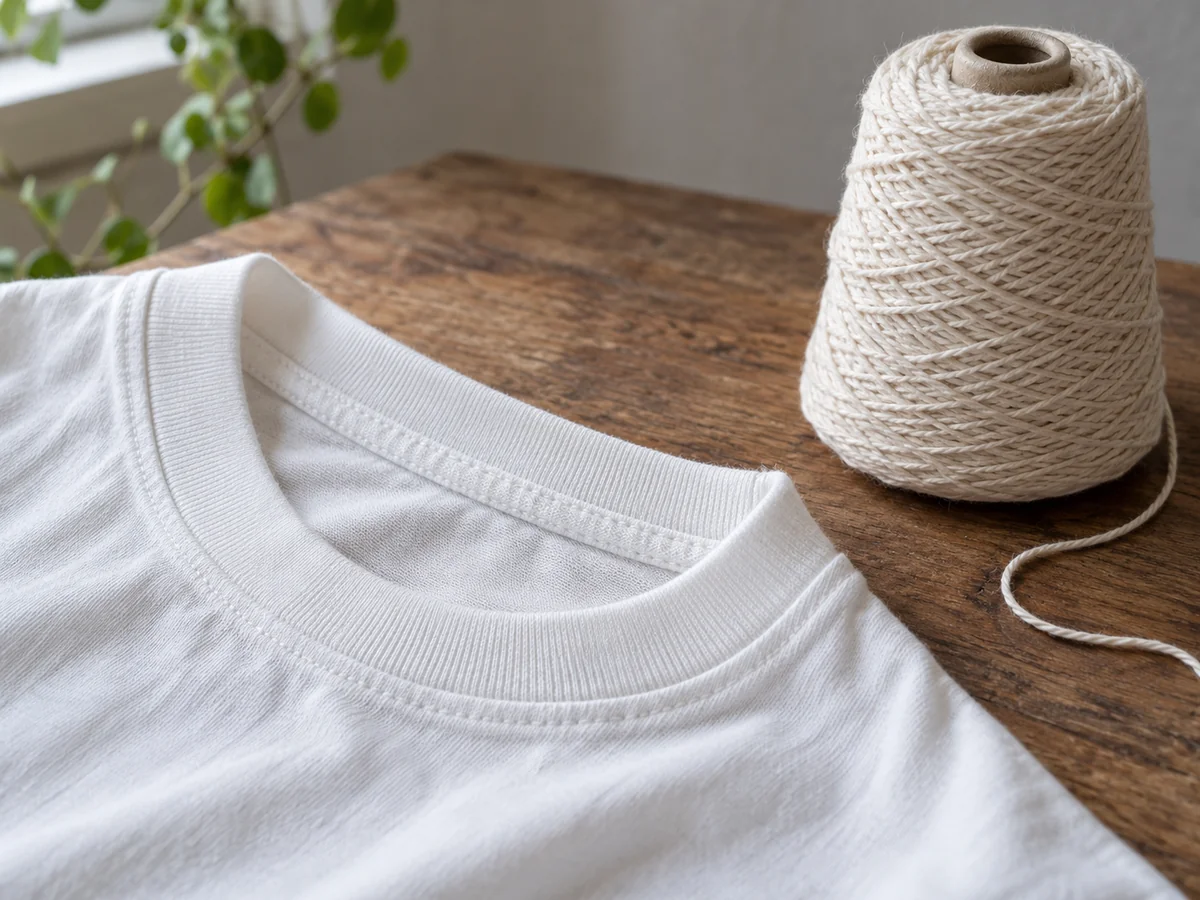
Ring spinning is one method of turning prepared fibres into yarn. It uses drafting and twist to form a continuous strand. Other spinning systems create different yarn structures. Those structures can influence the feel and appearance of a fabric, which is why a spinning term appears in descriptions of everyday tees.
For a shopper, knowing the mechanism in detail is less useful than understanding its limits. Ring-spun cotton does not specify the garment's weight, dimensions or quality control. It also does not tell you whether the cotton was combed beforehand. If a description gives both terms, it is providing two pieces of manufacturing information rather than repeating the same claim.
Compare without squeezing everything into softness
A ring-spun tee may be chosen for a smooth, comfortable surface, but try to assess more than the first touch. Does it drape the way you like? Does a pale colour provide enough coverage? Is the neckline comfortable? A very soft tee can still be too long, too transparent or awkward under a jacket.
Compare similar weights and constructions where possible. Holding a thin fashion tee beside a thick structured tee creates several differences at once. If one feels softer, you cannot confidently attribute the entire difference to the spinning method. Finishing treatments, yarn size and knit construction also influence the finished result.
Check the print independently. A large applied graphic may feel more prominent than the base fabric, especially against the chest. A small design on otherwise smooth jersey creates a different wearing experience. Product close-ups are useful here because a general description of soft cotton says little about the decoration.
Keep a reference that survives the wash
When you find a fabric you enjoy, note the actual product style and composition, not just ring-spun. Keep the care label information and the measurements after ordinary washing. Another tee bearing the same fabric term may use a different cut or weight, while another colour in the same style may have a different blend.
Avoid assuming that ring-spun means shrink-proof or pill-proof. Follow the garment's own care requirements. If a seller makes a specific claim about dimensional stability or durability, look for a clear explanation rather than filling in the gaps yourself. A manufacturing word cannot answer every question about later use.
The most useful approach is to let the label explain one part of a shirt you can evaluate as a whole. You do not need to become a textile specialist to buy well. Knowing that ring-spun is a process, rather than a universal quality score, already makes it easier to read a description without being carried along by the sales language.
Further information