Flat or boxy pouches for small things
Choose a flat or gusseted pouch by the shapes of the things inside it and the bag around it.
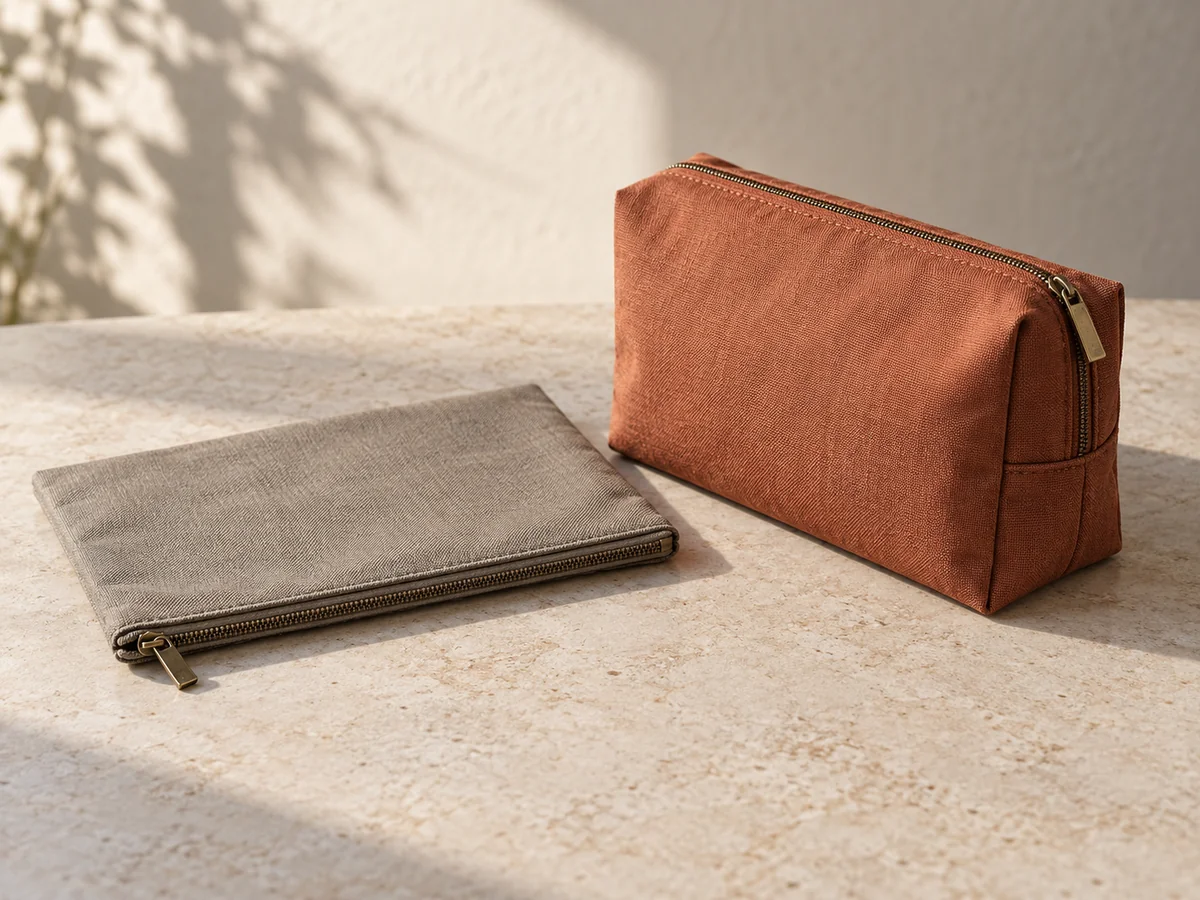
Lay out the small things first
A pouch can make a bag calmer, but choosing its shape before deciding what it will hold often creates another awkward object. Put the intended contents on a table. A passport, receipts and a slim cardholder form a relatively flat group. A plug, coiled cable and small charger need depth. Their arrangement gives you a practical starting point for choosing between a flat envelope shape and a boxier design.
A flat pouch uses little space when it is lightly filled. It can slip beside a notebook or into a narrow internal pocket. Add several bulky objects, however, and its centre bulges while the corners remain tight. That expansion can shorten the usable space around the zipper. A pouch that looks wide enough when empty may not close comfortably around a large plug.
Depth helps some objects and hides others
A gusseted or box-shaped pouch gives three-dimensional items a place to settle. It can stand on a desk and open into something easier to search. The same depth may let small flat items collect beneath larger ones, though, and it occupies a noticeable block inside a slim bag. Do not buy extra volume merely because it seems more versatile.
Think about how you remove things. A cable used every day should not require emptying a pile of rarely needed adapters. One deep compartment may work for a single group of supplies; two smaller pouches might suit separate tasks. Dividers can help, but they also impose their own dimensions. The shape of a pocket must still accept the largest item you intend to place there.
Match it to the outer bag
Measure the space where the pouch will live, including access through the bag's opening. A wide boxy organiser may fit at the base but be difficult to lift out past a narrow top. A flat version can slide alongside books, provided it does not disappear beneath them. Leave a little room for your hand to retrieve it rather than filling every gap precisely.
Check padding claims and materials independently of shape. A soft fabric box is not automatically protective storage for delicate electronics, and a zip pouch is not necessarily suitable for holding a leaking liquid. Follow the design's intended use. If sharp objects are involved, use an appropriate protective case rather than expecting ordinary lining fabric to contain them.
Before buying a collection of matching pouches, test one with a clear task. Put only the intended items inside and check whether the closure moves freely. The right shape should reduce searching without wasting much space. If you have to compress every cable or shake everything out to find a small object, change the arrangement before adding another compartment.
Further information