Poster paper weight is not the whole finish
Paper weight helps you compare a print, but surface, thickness, size and framing can matter just as much.
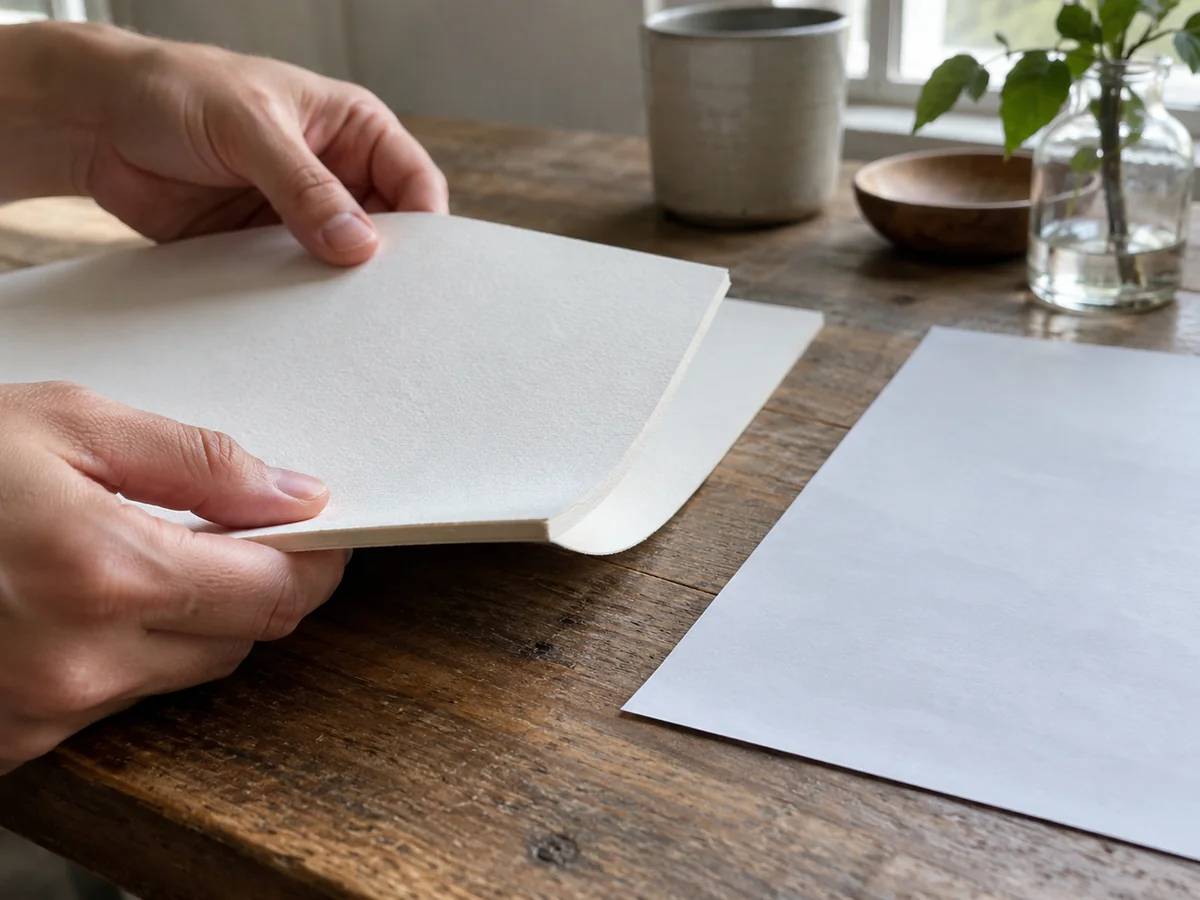
What the number measures
GSM means grams per square metre. It describes the mass of a defined area of paper, not the weight of the finished poster and not a direct measurement of its thickness. Two papers with the same GSM can feel different because of their composition, density and finish. A larger sheet also needs different handling from a small card, even when both use paper described by the same number.
Use the figure to compare like with like. If two otherwise similar posters come from the same range, a weight difference can be a useful clue to their feel. Across unrelated papers, it is less decisive. Do not assume that choosing the highest number automatically gives the clearest printing, the best colours or the most suitable sheet for the frame you already own.
The surface changes the image
A smooth glossy surface and a textured matte one present an image differently in light. Dark colours, fine lines and large pale areas can each make the difference noticeable. A product photograph on a screen may hide texture or add reflections that are not representative. If the finish is important, look for a close detail view, a clear stock description or an available sample from the printer.
Think about where the poster will hang. Light from a window or lamp can reflect from the print or from the glazing in front of it. Choosing matte paper does not remove reflections from ordinary glass. The complete display, including frame and position, determines what you see. Avoid placing a valued paper print where damp, heat or strong direct sunlight will shorten its useful life.
Match the paper to the display
A lightweight poster can work well when supported properly in a frame. A heavier art paper may still need suitable mounting and protection. Check the frame's capacity, backing and instructions rather than forcing a thick stack into a shallow rebate. If using clips or a hanging rail, confirm that the system suits the size and weight of the sheet and will not damage important edges.
Shipping matters too. Find out whether the poster arrives flat or rolled and how the maker recommends unpacking it. Keep your hands clean and dry, and do not press a curled print under random heavy objects that could mark its surface. The paper weight belongs in the description, but it should sit alongside the dimensions, finish and intended display. Those details together tell you far more than an isolated number followed by the word premium.