Match a poster to the frame opening
Measure the sheet, the visible image and the frame opening separately. A familiar size name does not make all three identical.
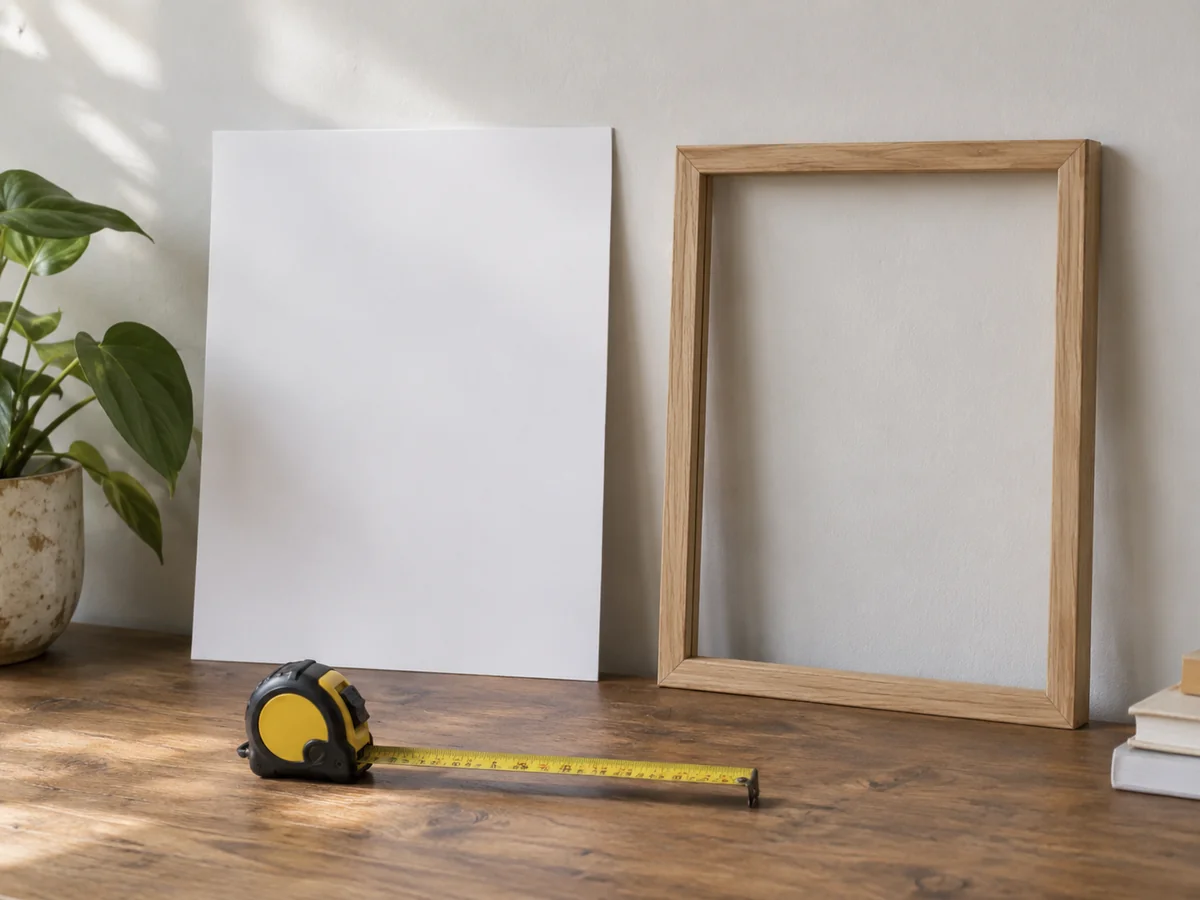
Begin with the print you have
Take the poster out of any protective packaging carefully and measure its full width and height on a clean surface. Include an integral paper border, but do not include a separate backing board or sleeve. Use one unit throughout your notes. An A-series size, an inch-based size and a rounded centimetre description can look similar while differing enough to cause a framing problem.
Write down the visible image size as a separate measurement if the sheet has a border. Also note whether a signature or important detail sits close to an edge. That information matters because the frame lip or a mount opening usually overlaps part of the paper to hold it in place. The entire sheet is not necessarily visible when a frame is described as fitting that sheet size.
Understand what the seller is measuring
A frame's advertised size commonly refers to the artwork it accommodates, rather than the outside dimensions of the moulding. The view through the front is another measurement again. A mount has an outer size that fits the frame and an inner opening that reveals the image. Read the seller's measuring instructions because its order form may calculate overlap for you or expect you to specify the final opening.
Avoid adding or subtracting a standard overlap from memory. Frame makers use their own instructions and tolerances, and a custom order can be expensive to correct. If the image runs to the paper's edge, tell the framer before ordering. Ask which parts will be covered and how the sheet will be held. A photograph with the measurements marked on a copy can make that conversation much clearer.
Check depth and the final wall space
The frame must have room for the print, backing, glazing and any mount or spacer used in the assembly. Do not force the retaining tabs onto a stack that is too thick. If you are reusing a frame, inspect its condition and follow the supplier's fitting instructions. Damaged glazing and unreliable hanging hardware need attention before the artwork is put on a wall.
Finally, measure the outside dimensions against the intended display area. A broad frame and mount can add considerably to the space occupied by a modest print. Use a paper outline on the wall if the proportions are hard to picture, avoiding adhesive that could harm the finish. The process is easier when the three sizes remain separate in your notes: the sheet you own, the image you want visible and the complete frame you intend to hang.