Wash clothing with added patches carefully
The fabric, patch and attachment method all need compatible care. Use the most restrictive instructions that apply.
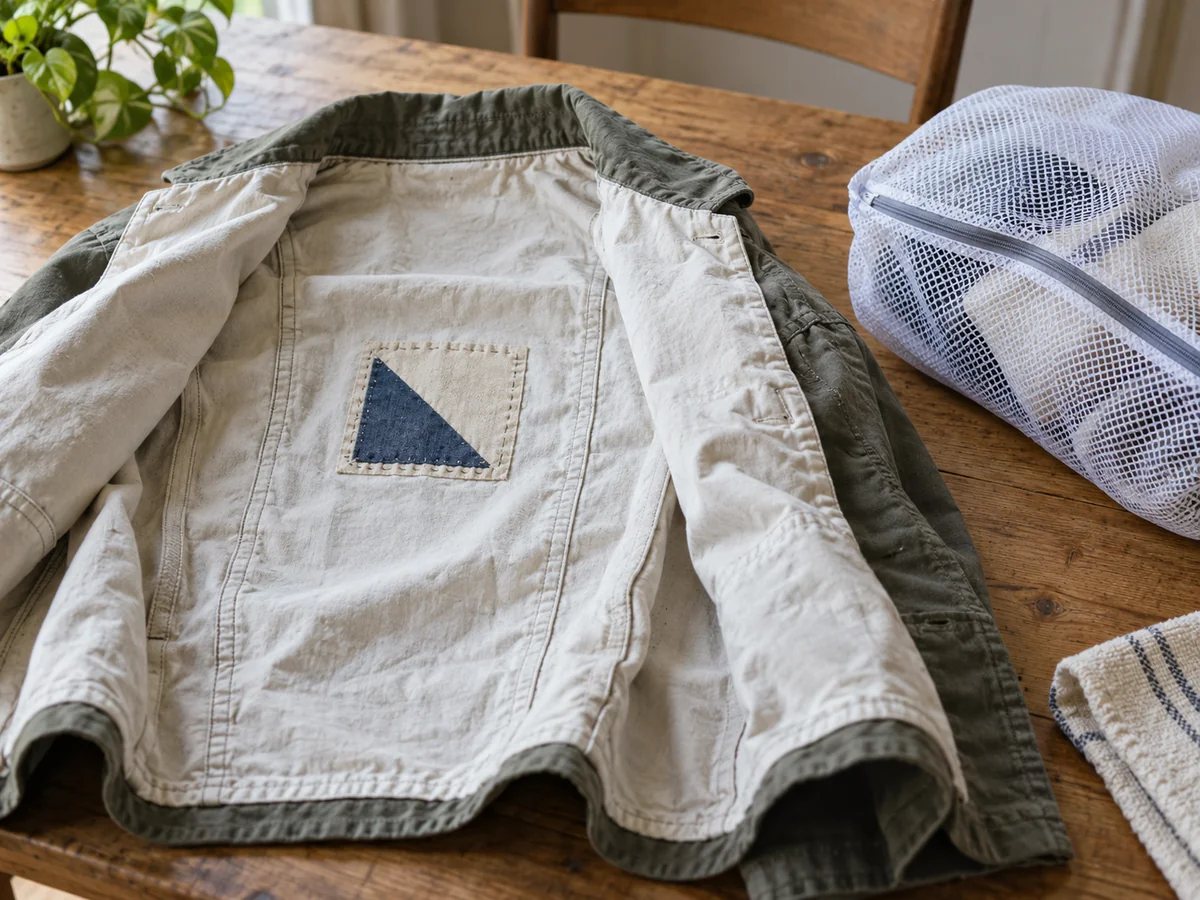
Keep the patch instructions with the garment
Adding a patch changes the care questions for a piece of clothing. The original label describes the garment as supplied; the patch brings its own material, adhesive or stitching. Keep the packaging or take a photograph of the application and care instructions. That information is more useful than remembering only that the patch was described as washable.
A sewn patch, an iron-on patch and a self-adhesive repair patch are not interchangeable. Some attachments need a waiting period before washing or heavy stretching. Follow the period specified for the actual product instead of borrowing a number from another brand or patch type.
Inspect the attachment before washing
Look around the edges for lifting, loose stitches or frayed fabric. Do not rely on the wash to settle an edge that is already coming away. Repair it using a compatible method or ask the patch maker for guidance. Additional heat is not automatically safe for a garment carrying an iron-on patch, particularly if there is other decoration nearby.
Remove pins, badges and detachable accessories before laundering. Close any appropriate fasteners so they do not catch the patch. If the garment and patch instructions permit turning the item inside out, that can reduce direct contact with neighbouring pieces. It does not override a hand-wash requirement or make an unsuitable temperature safe.
Choose a compatible programme, detergent and drying method. If the garment allows hotter washing than the patch, the patch's lower limit matters. If the patch allows tumble drying but the garment prohibits it, keep the garment out of the dryer. Where the instructions cannot be reconciled, ask before proceeding.
Check the result after it dries
Support the garment while damp and avoid pulling on the patch to reshape the surrounding cloth. A patch may be less stretchy than the fabric beneath it, so force can concentrate stress around its edges. Let the item dry as instructed, then inspect the attachment again before wearing it.
If an edge has lifted, do not peel farther to see how well the rest is attached. Follow the maker's repair instructions, or consider a suitable sewn reinforcement only when the materials and intended use allow it. A repair that changes the fabric's movement can create another problem elsewhere.
The best time to plan washing is before applying the patch. Choose a product compatible with the clothing's care and flexibility, and place it where its extra stiffness will be acceptable. Once attached, treat the garment as a combination of materials. That keeps a useful repair or decorative addition from becoming the weakest part of the next laundry cycle.