Cuffs can change how a sweatshirt feels
Ribbed cuffs control the sleeve opening, but they should not have to grip uncomfortably to stay in place.
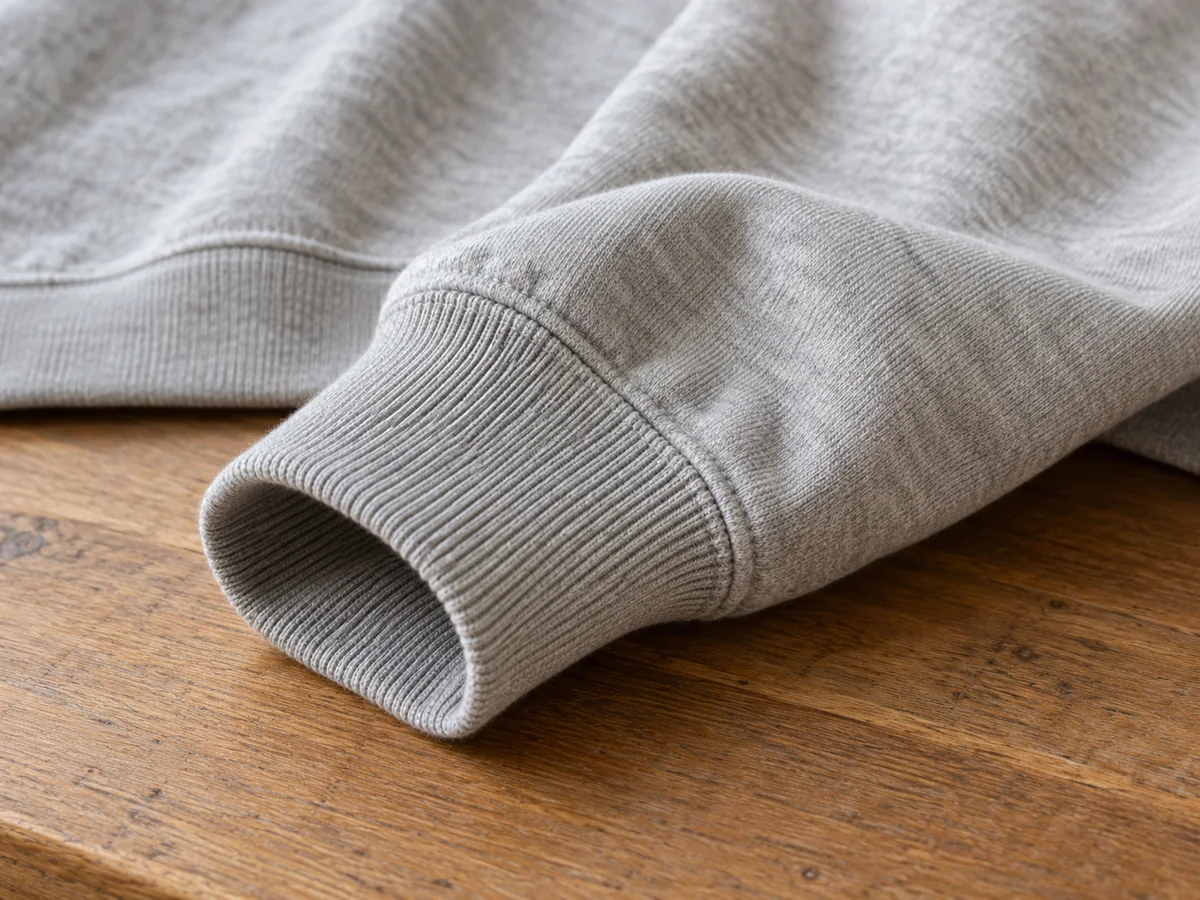
Try them at the wrist first
A sweatshirt cuff has a practical job: it gathers the sleeve opening and helps keep fabric near the wrist. That sounds minor until the cuff is either loose enough to slide over your hand or firm enough to feel distracting. Check it while your arms are resting naturally, before deciding how the sleeves look pushed up.
The ribbed structure usually stretches differently from the sleeve body. Cuff depth, opening size and material all affect the result. A wide cuff is not automatically tighter, and a narrow cuff is not automatically easier. The useful test is how the actual garment sits on your wrist.
Make room for a watch and movement
If you wear a watch, try the cuff in the position you normally use. Decide whether you want the sleeve to cover the watch, sit behind it or move over it freely. A cuff that repeatedly catches on a watch edge can become more annoying than a sleeve that is slightly longer than your ideal.
Bend your elbow and reach forward. The sleeve can pull back when the arm moves, so a cuff that seems neatly positioned while standing still might travel uncomfortably. On a dropped-shoulder garment, the sleeve measurement may begin farther down the arm. Consider the whole sleeve path instead of blaming the rib alone.
Then push the sleeves up only as far as you normally would. Check whether the cuff feels comfortable at that point and whether a large fold of fabric collects above it. Some sweatshirts are enjoyable with sleeves down but unsuitable for working with them pushed to the forearm. That is a real use difference worth noticing before purchase.
Check the attachment and the recovery
Look at the seam joining the cuff to the sleeve. It should be secure, without gaps or a twist that makes the cuff sit awkwardly. Compare the two sleeves after the garment is straightened. Do not pull hard on a new cuff as a test of durability; modest movement is enough to assess ordinary comfort.
After stretching it over your hand, let the cuff rest. Notice whether it returns to a tidy shape. An obviously loose or rippled opening may already be wrong for the way you want to wear it. For a deliberately relaxed style, however, a looser cuff might be intentional, so use the product images as context.
Care also affects how a sweatshirt retains its shape. Follow the label, avoid pulling on the cuffs when removing the garment and do not use them as handles for lifting a heavy wet sweatshirt. Choose a cuff that works without repeated tugging or folding. A small detail becomes a good one when it stops demanding your attention.
Further information