What a heavyweight T-shirt actually changes
A substantial tee changes the shape of an outfit, but fabric weight alone cannot tell you how it will wear.
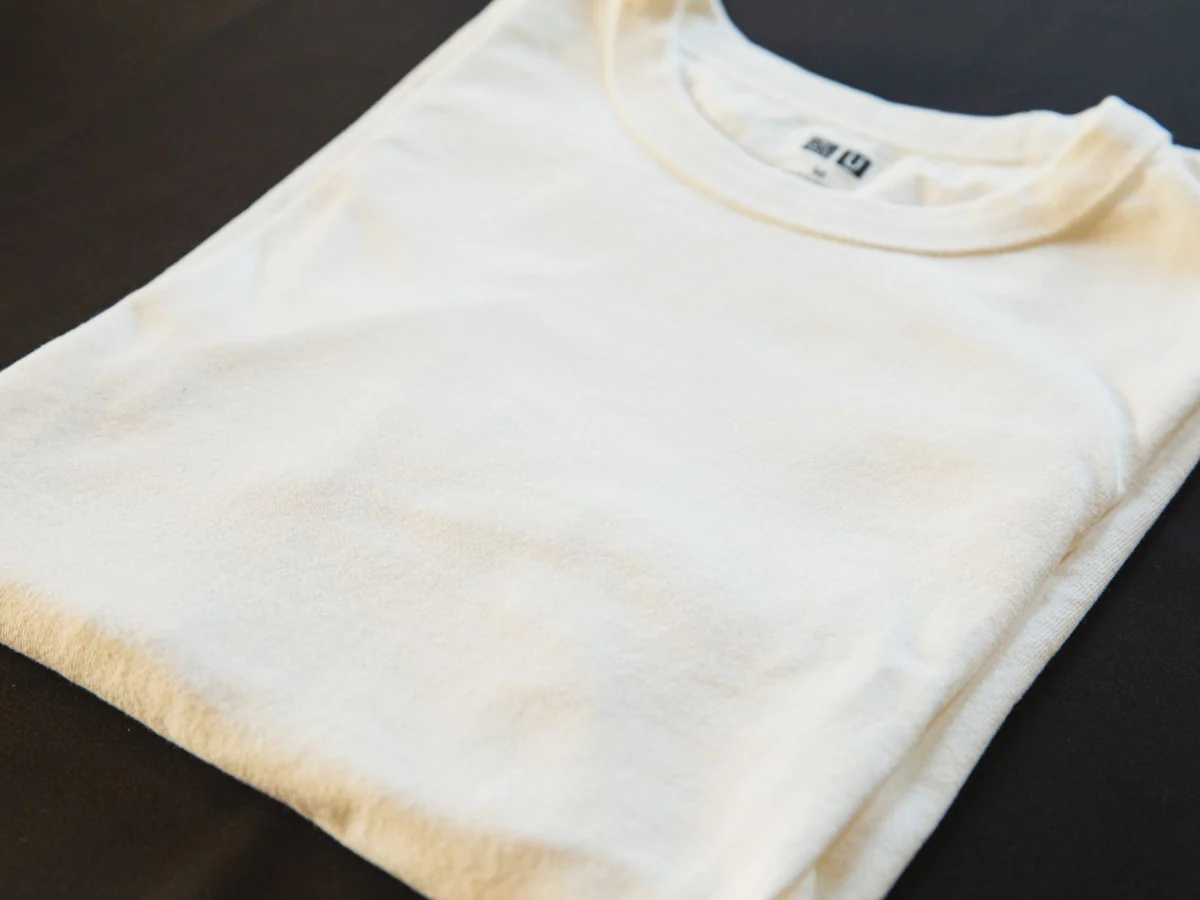
Start with what the number measures
A heavyweight T-shirt usually feels more substantial when you lift it, yet the weight printed in a description is normally the mass of a measured area of fabric. GSM means grams per square metre. It does not mean that every finished shirt weighs that amount: a large shirt contains more fabric than a small one. Compare figures expressed in the same units before comparing the words heavy, premium or substantial.
There is no single boundary that every clothing maker uses for a heavyweight tee. A numerical specification is more useful than the category name. Even then, it describes only one part of the shirt. Two fabrics of similar weight can feel surprisingly different because their yarn, knit and finishing differ.
Notice the outline, then the movement
A dense jersey can stand a little farther away from the body instead of following every contour. That can suit a straight, structured silhouette, particularly under an open overshirt. However, a heavy fabric cut narrowly through the chest still fits narrowly. Weight does not provide the extra width of a deliberately relaxed pattern.
Try raising both arms and sitting down. Watch whether the hem rides up, whether fabric collects stiffly above the waistband and whether the underarm feels crowded. If the shirt is intended for tucking, assess the actual bulk inside your trousers. A tee that looks tidy hanging loose can feel cumbersome tucked beneath a fitted waistband.
For a layer under a close cardigan, the practical question may be sleeve bulk rather than body weight. A sturdy, wide sleeve can bunch at the armpit. For a shirt worn alone, you might welcome exactly that extra presence. Neither result says anything about your usual size being wrong.
Keep the quality checks separate
Inspect the neckline, seams and hem rather than treating heft as a durability certificate. Look for an even collar, secure stitching and side seams that hang reasonably straight. Read the fibre composition for the selected colour, since a heather version may use a different blend from the plain colours in the same style.
White fabric also deserves its own opacity check. A substantial jersey may offer better coverage than a thin alternative, but stretching, knit openness and lighting can change what shows through. If opacity matters, inspect the shirt in daylight and at the places where it fits most closely.
Finally, check the care label and the measurements of a washed shirt you already like. Preshrinking reduces the surprise of dimensional change; it does not make all future shrinkage impossible. Choose the heavyweight option because its feel and shape suit the way you dress, with enough room for movement and the care routine it actually needs.
Further information