Choose a pin back that suits the use
The fastening is part of the pin. Choose it for the fabric, movement and access involved rather than treating every small back as interchangeable.
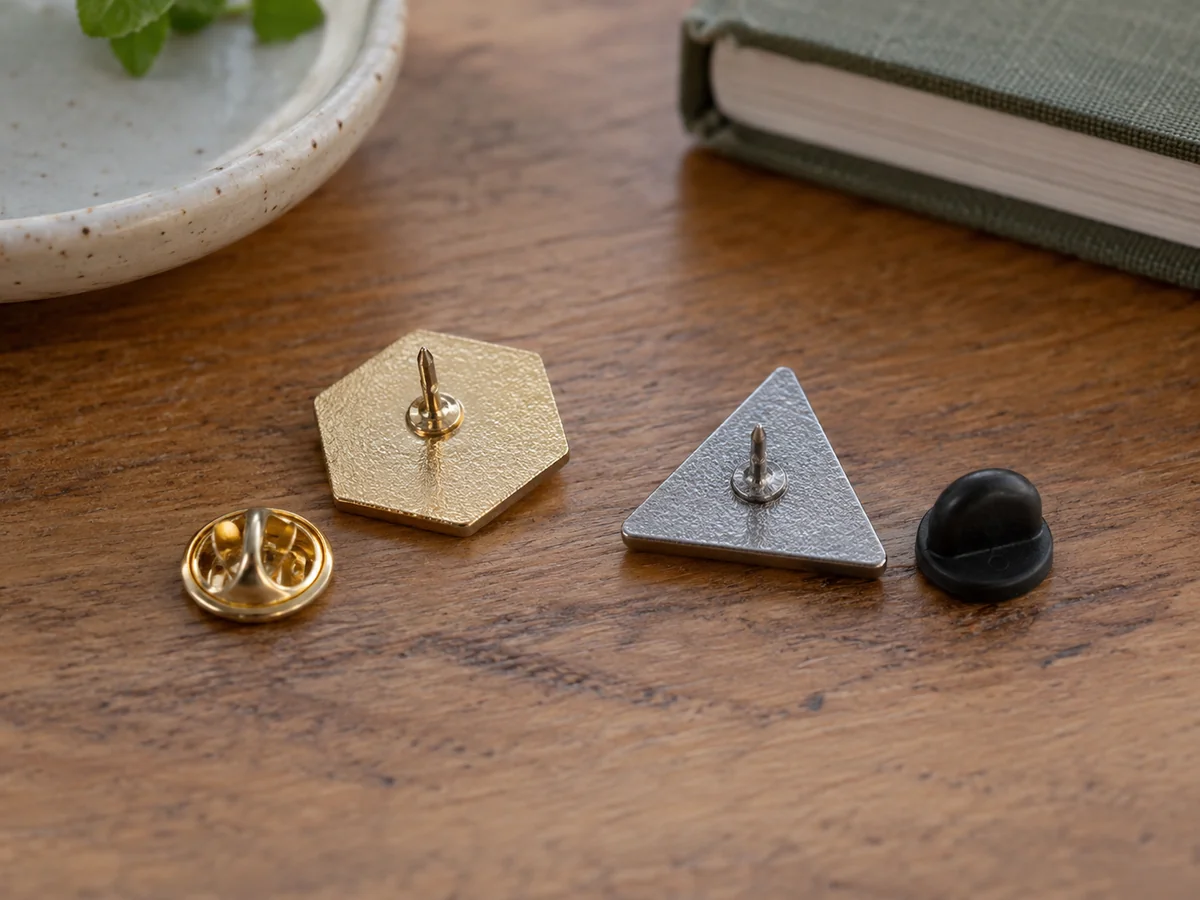
The hidden half of a pin
A pin's front gets the photograph, but the back decides how it stays on a jacket or bag. Common options include a soft push-on clutch, a metal butterfly clutch and various locking mechanisms. They are not operated in exactly the same way. Before attaching a new pin, practise opening and closing its fastening while it is off the fabric, keeping the sharp post away from your fingers.
A soft clutch can feel less intrusive on the inside of a thin garment. A locking design may be useful where a pin will meet more movement, but it still needs the correct fit and careful operation. No fastening makes a pin impossible to lose. If the mechanism feels loose, damaged or unfamiliar, ask the seller for instructions or a suitable replacement rather than relying on extra force.
Match the post to the material
Fabric thickness changes how much of the post reaches the clutch. A thick bag panel, an added lining and a reinforcement layer can leave too little usable post for a particular back. Conversely, a long post on a very thin garment may feel uncomfortable against the body. Check the assembled pin from both sides before wearing it. The fastening should sit securely without the post pressing somewhere it should not.
Decide whether puncturing the material is acceptable. A pin makes a hole, and delicate fabrics, coated materials or water-resistant panels may not be suitable places for it. On a valuable bag, use a dedicated display panel or removable accessory rather than assuming the hole will disappear. Make sure you can reach the fastening later without pulling apart a lining or emptying a pocket every time.
Check for movement, not just attachment
A large pin with one post may turn as the fabric moves. Two posts can help control orientation, but their spacing must still suit the area where the pin sits. Lay the pin against the garment or bag first and check how it meets seams, straps and nearby hardware. Avoid places where it can snag a seat belt, brush against a wrist or catch another person's clothing.
After putting it on, give the fastening a gentle check according to its design and inspect it occasionally during use. Remove pins before washing unless the maker explicitly specifies otherwise for both the pin and the item. Keep loose pins and backs away from young children and pets. A small dish or closed container gives spare fastenings somewhere safe to live. The best back is not necessarily the most elaborate one; it is the one you understand and can use securely in the place you have chosen.