Measure the working space for a desk mat
Measure the space your hands and tools use, including the mouse movement and notebook opening that product photos tend to hide.
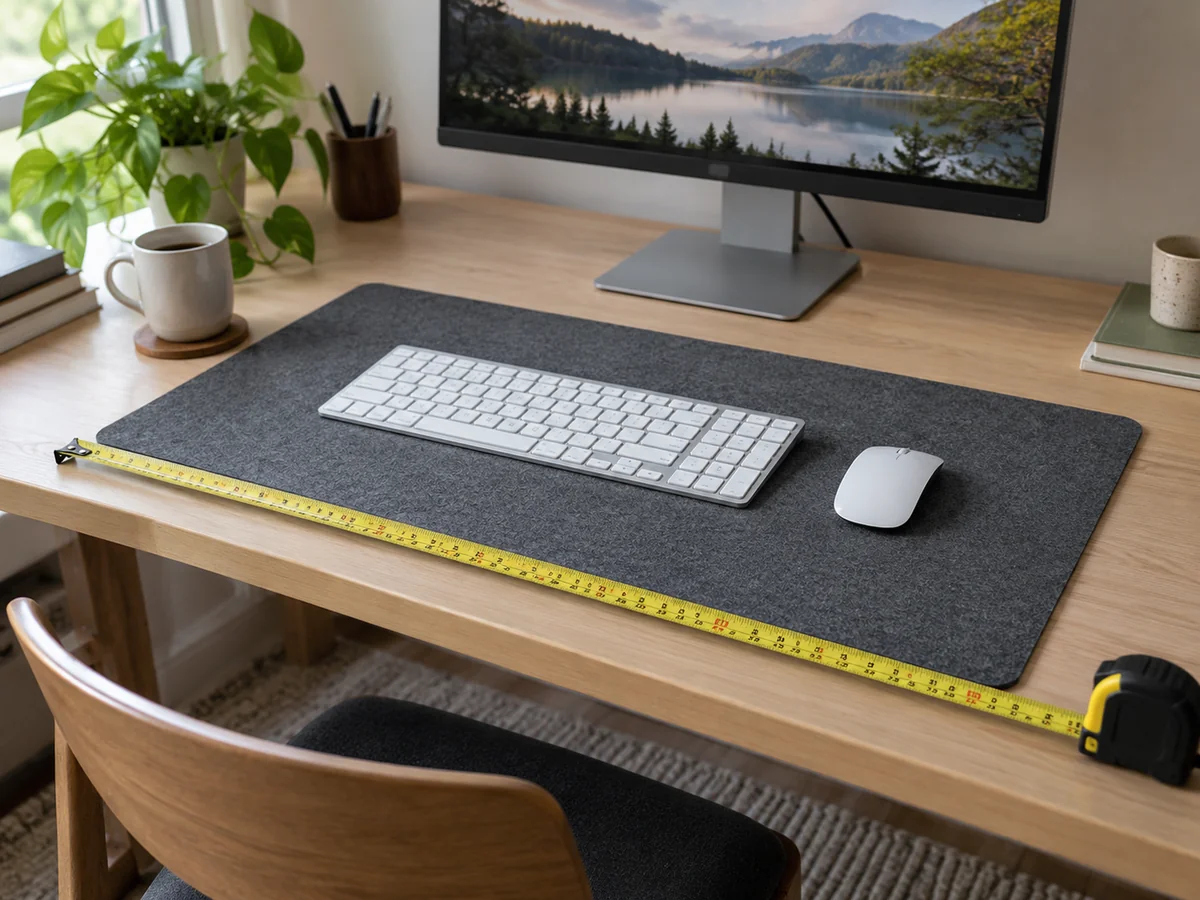
Map the working area
A desk mat looks tidy when a keyboard and mouse are placed neatly for a photograph. Your own desk may need room for a notebook, a microphone base, a drawing tablet or an untidy but useful stack of papers. Put those items where you normally use them, then measure the area the mat would cover. Include the movement around the mouse rather than only the mouse's parked position.
Use a paper outline or a piece of clean scrap material to picture the proposed dimensions. Check that it fits within the desktop without hanging over an edge or covering a ventilation opening. A large mat may look generous but collide with monitor feet or make a small desk feel crowded. A smaller one can work better when you need to move a keyboard aside for writing.
Depth can be more revealing than width
Many people compare the long horizontal dimension first. Depth determines how the mat meets the front of the desk, the keyboard and anything behind it. If the mat sits partly beneath a heavy monitor stand, lifting it for cleaning becomes less convenient. Check the thickness as well, particularly where the keyboard or a wrist rests near the edge. A raised stitched border can feel noticeable in a place your arm crosses often.
Think about the position of cables and accessories. A mat should not force a mouse cable into an awkward bend or conceal a spill under electrical equipment. Keep drinks in an appropriate place and do not assume the mat makes the desktop waterproof. Moisture can travel around its edges or remain underneath, so lifting and cleaning it according to the care instructions remains part of using it.
Match the surface to the task
Felt can offer softness, while a firmer smooth surface may suit writing directly on a loose sheet. The precise product matters. A manufacturer may explicitly say that a soft pad is not intended as a writing surface, even though it looks ideal for a desk. Test how your mouse tracks and how a pen behaves if writing is part of the plan. Material texture can matter more than a few extra centimetres.
Allow for maintenance and storage. If the mat must be moved for dinner or packed away regularly, check whether it can be rolled and how the maker recommends doing so. Do not fold a product intended to stay flat. A useful mat defines the area you work in without demanding a complete rearrangement of the room. Once you have measured that area, choosing the colour and finish becomes a simpler, more enjoyable decision.
Further information