What combed cotton tells you
Combing is a yarn preparation step, not a complete verdict on the quality of a finished shirt.
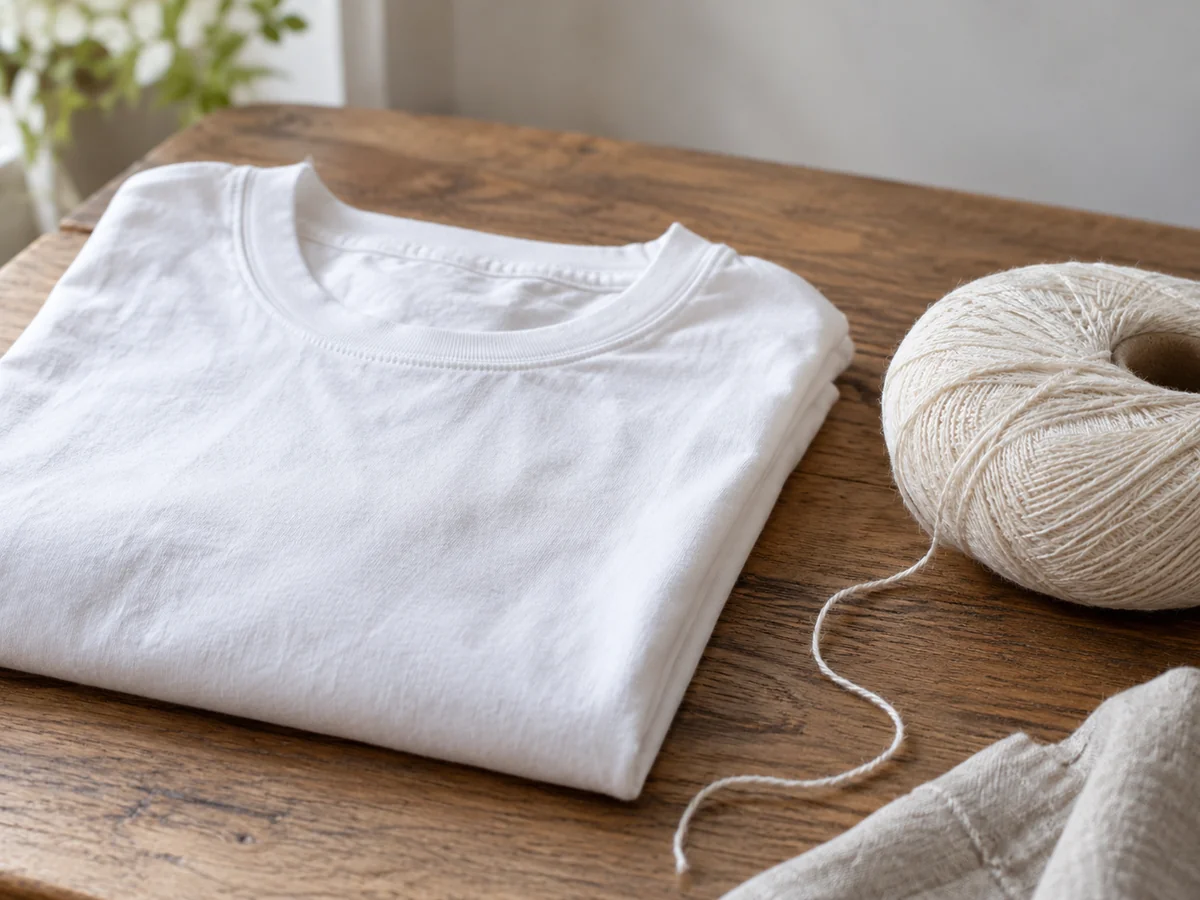
What has been combed
The word combed refers to a preparation step before cotton is made into yarn. Combing removes shorter fibres and helps prepare a more uniform material for spinning. It can support the production of finer, smoother-feeling yarns. It does not mean that someone has brushed the finished T-shirt until its surface feels soft.
You will often see combed and ring-spun together in a description. They describe different stages: preparation and spinning. A shirt can also list cotton without giving either detail. The absence of the term does not by itself establish that the garment is poor, just as its presence does not assess the seams, fit or print.
Put the promise beside the finished fabric
If you are choosing a tee for direct contact with the skin, compare the feel of the actual garments when you can. Notice the inside as well as the outside. A smooth face can sit over a scratchy label or an uncomfortable neck seam. Those details may matter more during a day of wear than the difference between two reassuring fibre descriptions.
Hold the fabric loosely to see its drape. Combed cotton can be made into more than one weight and knit construction, so it is not automatically lightweight, fluid or opaque. A substantial combed-cotton tee can have a very different outline from a thin version. The desired shape should guide your choice alongside softness.
Check whether the feel is consistent across the garment. A thick decorative print can dominate the sensation on the chest, even when the underlying cotton is very smooth. If a soft all-over feel is the priority, examine the size and surface of the artwork rather than focusing only on the base fabric.
Avoid turning one detail into a ranking system
It is tempting to treat fabric terms as a ladder from ordinary to excellent. Clothing is more complicated. A garment made for a crisp, structured look may deliberately feel different from a fluid undershirt. The useful question is whether the complete shirt performs the job you need, including the amount of coverage and the room beneath an outer layer.
Read the composition for the colour you are buying. A heather option can contain additional fibres even when the main description highlights cotton. Then look at the care label, especially if you intend to tumble dry everything together. A pleasant first touch is only one part of living with a garment.
For an online purchase, request a clear fabric weight, size chart and detail photograph if they are missing. Combed cotton is meaningful manufacturing information, but it should sit beside those practical facts. Use it to understand the material, rather than letting it stand in for the whole decision.
Further information