A mug handle needs room for your hand
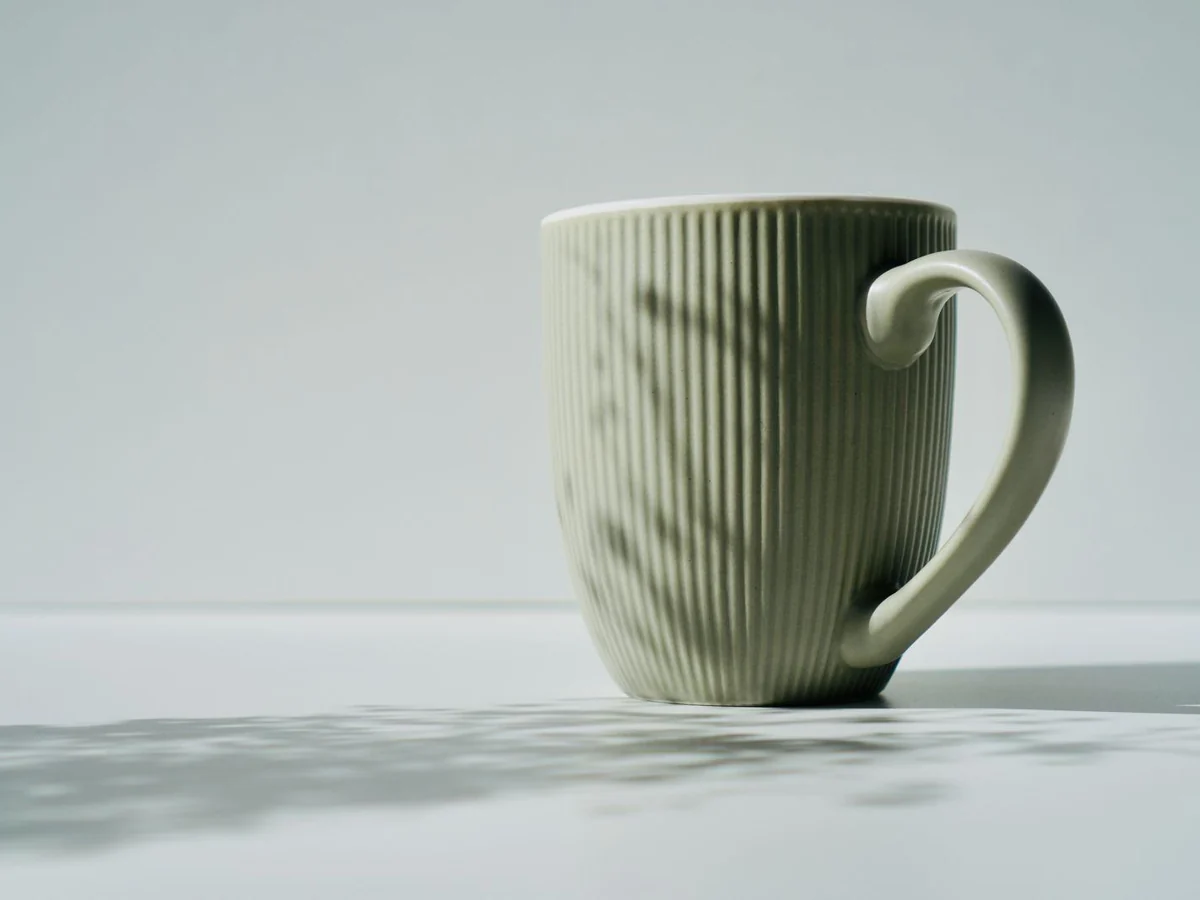
The handle can decide whether a handsome mug becomes your everyday cup. Check its space, angle and balance before choosing a whole set.
Start with the way you hold a cup
Some people hook one finger through a handle and rest another underneath. Others want space for two or three fingers. Neither habit is unusual, and a handle designed around the other one can feel awkward every morning. Before buying a mug, notice how you naturally pick up the cup you already use. The useful comparison is with your own hand, rather than the hand in a carefully styled photograph.
If you can inspect a mug in person, try the handle while the cup is empty and at room temperature. Your knuckles should have space without pressing hard against the body. A wide opening is not automatically comfortable: the handle itself might be thick, sharply angled or slippery. Check whether you can put the cup down without shifting your grip at the last moment.
Consider the weight beyond the handle
An empty mug tells only part of the story. Once you add a drink, the handle has more weight to support, and the cup may pull away from your fingers. A tall, heavy mug with a tiny handle can ask much more of your grip than a lighter, wider one. Do not test a doubtful handle with a hot drink. Think about the filled weight, or compare the listed empty weight and capacity with a familiar mug.
There is also the journey between the kitchen and wherever you drink. If you usually carry a mug in one hand while opening a door, an easy, stable grip matters. At a table, a handleless cup may suit your habits, provided the vessel is intended for hot drinks and can be held comfortably. Handle shape is a practical choice rather than a contest between traditional and modern design.
Check the small points of contact
Run a finger gently around a cool handle and its joins. Look for uncomfortable edges, a rough finish or a crack where the handle meets the body. A large decorative loop can still have an awkward narrow pinch point. If shopping online, seek a side view that shows the entire opening, along with dimensions. The overall width of the mug often includes the handle; that measurement does not tell you how much finger space is inside it.
A handle should also fit the places where the mug lives. Check the cupboard depth, the space between neighbouring cups and any dishwasher arrangement you rely on. Buying one mug first gives you the chance to discover these details without committing to six. The cup that earns a place beside the kettle is often the one you can pick up, drink from and put away without giving its design another thought.
Further information