What to check when you are between sizes
Choose around the part that needs room, then check the consequences for length, sleeves and neckline.
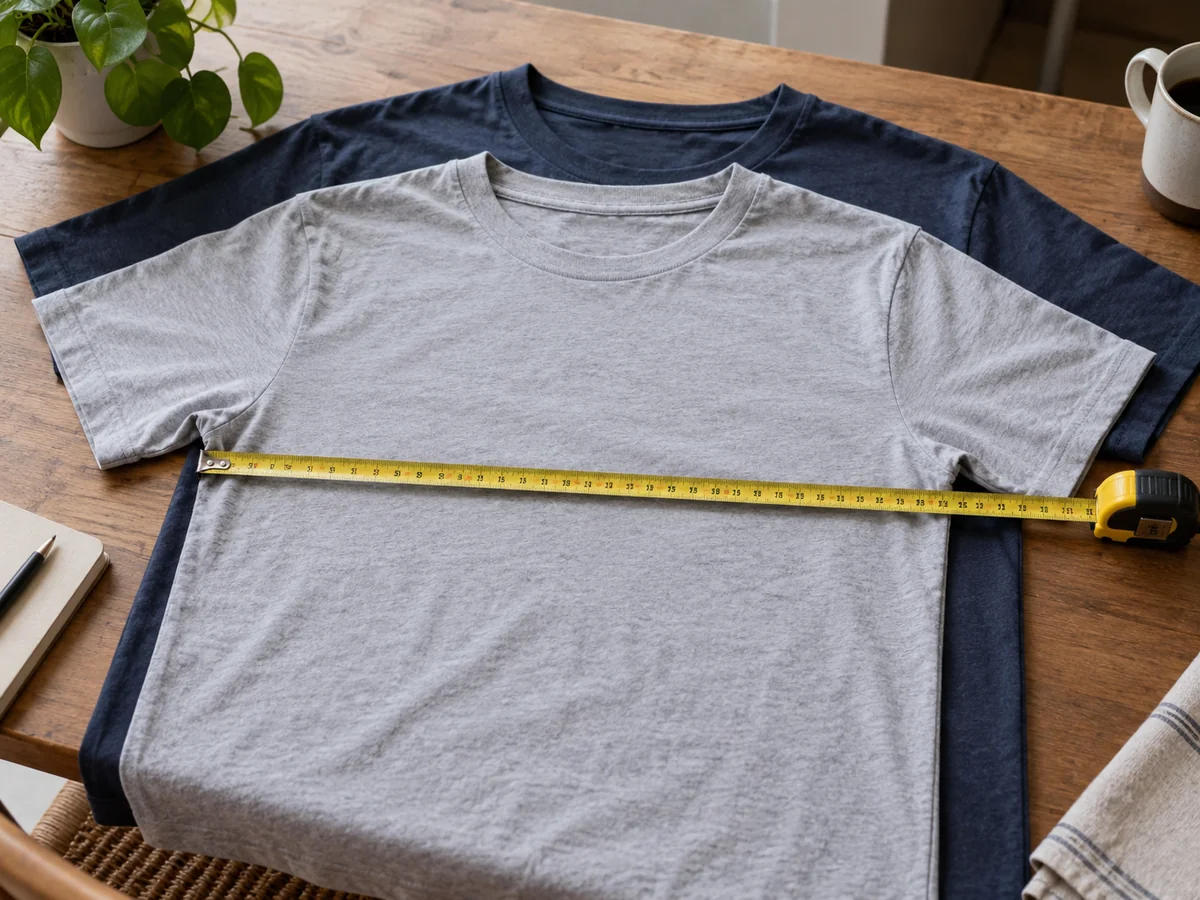
Name the difference you need
Being between sizes is often a sign that different parts of a garment fit differently. The smaller size may work at the waist but feel close through the chest. The larger may give comfortable shoulders while adding sleeves that cover the hands. Start by naming the actual problem instead of assuming you must choose between generally tight and generally loose.
Use the product's measurement diagram and compare both sizes with a similar garment you already wear. Look at the change between sizes, not only the letters. Some patterns add substantial width with little extra length; others increase both more noticeably. The step is specific to that garment.
Protect the movement you need
Try the movements relevant to your day. Reach forward, sit down and lift your arms modestly. A tee worn under a jacket needs to move with both layers. A hoodie intended for wearing over another sweatshirt needs space for that combination. Do not judge it over bare skin if that is not how you will use it.
If one size restricts a movement you regularly make, that is a practical reason to reconsider it. Hoping the garment will stretch into comfort can be risky, particularly when a print, seam or non-stretch trim limits the fabric. Choose based on the fit now rather than a promised transformation after washing or wear.
The larger size has consequences worth checking too. Does the hem gather at the waistband? Is the neck opening too wide beneath an overshirt? Do the cuffs keep the sleeves in a useful position? Extra room in one area is not a free improvement everywhere else.
Sometimes the answer is another cut
A different pattern can solve a mismatch more directly than choosing the least inconvenient size. A shorter, wider tee may provide chest room without extra body length. A conventional shoulder may layer more easily than a dropped one. Look for the shape that addresses the issue rather than interpreting the size label as a judgement about your body.
Read fibre and care information before making assumptions about shrinkage. Do not deliberately buy too large on the belief that a hot wash will reduce it evenly, or too small on the belief that a blend cannot change. Uncontrolled changes can leave sleeves, seams and artwork behaving differently from the body.
For an online purchase, clarify whether the chart uses body or flat garment measurements and check any stated tolerance. If neither size has a suitable combination of dimensions, it is reasonable to leave that style behind. A useful wardrobe comes from clothes that work in ordinary use, not from finding a way to make every appealing design fit.
Further information