Cuffed and slouchy beanies fit differently
A folded cuff changes the depth and thickness of a beanie; a slouchy crown needs space to fall.
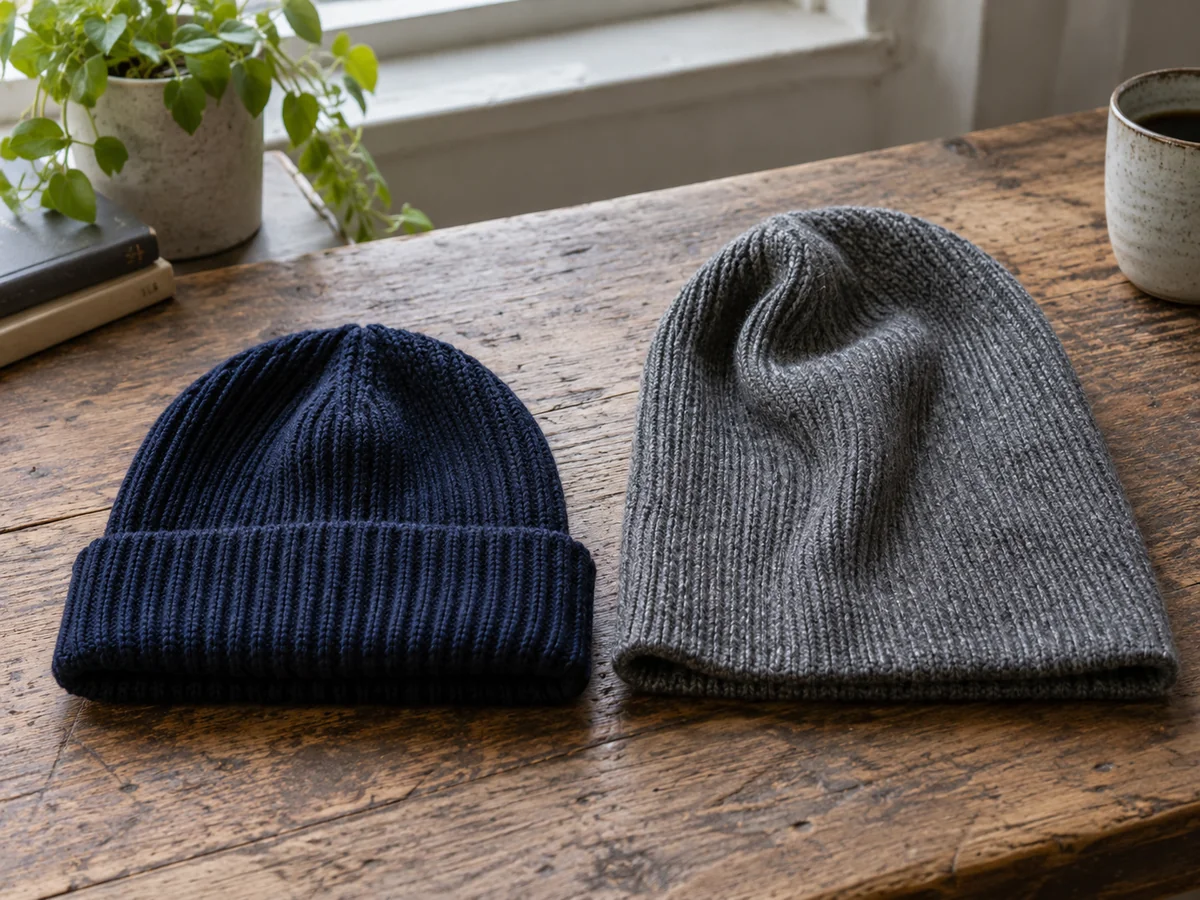
Choose where you want the edge to sit
Start with the part of the beanie that touches your forehead and ears. Do you want full ear coverage, a higher edge or the option to change it? A folded cuff lets you alter the depth to some extent, but it also puts a double layer of fabric around the opening. A long, slouchy style leaves more material above or behind the head.
These descriptions are not strict sizing categories. A cuffed beanie can also have extra crown length, and a short uncuffed one can fit closely. Look at the actual dimensions and worn photographs instead of assuming that a style name describes the same shape across brands.
Fold it the way you would wear it
Try the cuff at a sensible depth without repeatedly stretching the opening. A deep fold may reduce ear coverage; a shallow fold can leave more crown height. Notice whether the fabric holds the fold or tries to unroll. If there is a patch or embroidery, check how its position changes when you adjust the cuff.
For a slouchy style, allow the spare fabric to fall naturally. If you have to pull the edge low over your eyes to create the photographed shape, the proportions may not suit you. Hair volume also changes how much fabric remains free above the head. Try it with your normal hairstyle where possible.
Check the feel behind the ears and at the forehead. A secure fit should not require persistent pressure. Large seams, embroidery backing or a stiff label can be more noticeable than the yarn itself. Feel the inside as well as the outside before choosing solely on softness.
Think about coats, glasses and storage
A thick cuff can compete for space with glasses arms or over-ear headphones. A long crown can catch beneath a raised coat hood. Try the combination you actually use in cold weather, rather than deciding from the beanie alone. A lower-bulk style may be more convenient even if the heavier one initially feels cosier.
Read fibre and care information carefully. Two rib-knit beanies can require different washing and drying methods. Do not assume that all knit hats can be stretched wet to alter the fit. If the opening is uncomfortable when new, choose another size or construction rather than planning an uncertain reshaping treatment.
Store the hat clean and dry without keeping it pulled over an oversized object. Its useful shape comes from a comfortable opening and enough crown space for your preferred look. Once those are right, the choice between cuffed and slouchy is a matter of the silhouette and coverage you enjoy, rather than a rule about how a beanie is supposed to be worn.
Further information