Can you find things in a dark-lined bag?
Interior colour, opening size and pocket placement all affect how easily you can find a small object.
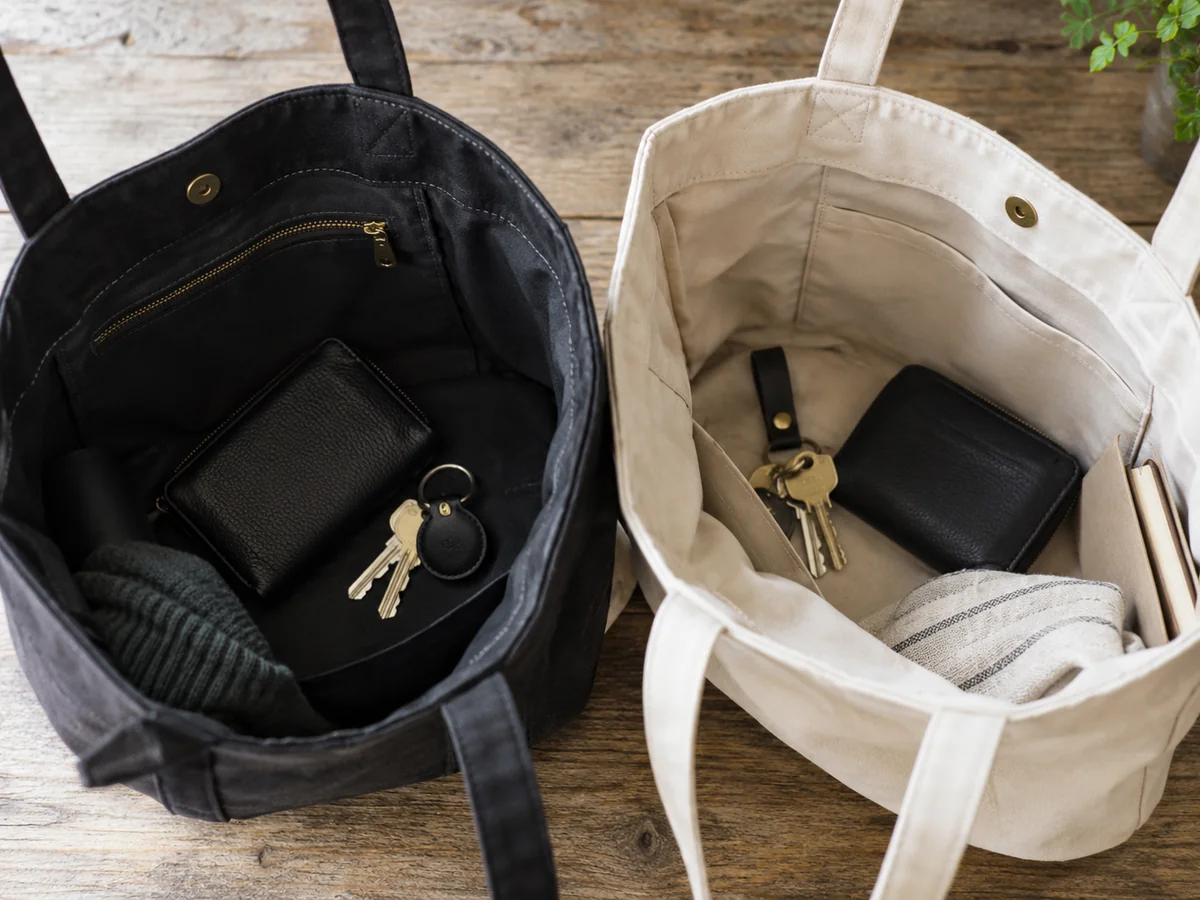
The lost key may be a visibility problem
A dark lining can look tidy and hide some marks, but a black key fob against a black base is not easy to spot in a dim hallway. Before rejecting the bag, consider what makes its interior difficult to use. The colour may be one factor; a narrow opening, deep body or unsupported sides can obscure the contents just as effectively.
Open the bag as far as it is intended to go and look inside in ordinary room light. Can you see the bottom without holding both sides apart? A pale lining may help contrast, but it will not fix a deep compartment packed with loose objects. A useful interior combines visibility with an arrangement that stops frequently used things settling beneath the rest.
Give the smallest items a fixed place
A key leash or accessible pocket can solve a search problem more directly than changing the whole bag. Use it for one consistent task rather than filling it with every small item. If the keys live there on one day and beneath a notebook on the next, the helpful feature has not become part of your packing routine yet.
A small light-coloured pouch can also create contrast inside a dark bag. Choose a surface and shape you can recognise by touch, especially if you retrieve things while standing. The pouch should be easy to remove through the opening and large enough for its contents without becoming another deep container to search. A distinctive zipper pull can help, provided it does not snag nearby items.
Compare light and dark honestly
Light linings can show ink, spills and dirt more clearly. Dark ones can disguise marks you would rather notice and clean. Neither colour establishes hygiene or durability. Check the fabric, seams and care instructions, then decide which trade-off suits your use. An interior used for lunch containers may need different cleaning access from one that mainly carries documents.
When shopping online, ask for an open-bag photograph taken in clear light. A tightly cropped pocket detail does not reveal the depth or darkness of the main compartment. Look at whether the lining lies flat, whether a broad pocket creates a hidden space behind it and whether loose fabric follows your hand upwards when you reach inside.
If you already own a bag you otherwise like, try a simpler packing arrangement before replacing it. Keep the largest items in a predictable position and separate the two or three things that repeatedly disappear. Avoid adding a large rigid organiser without checking how much room and weight it introduces. The goal is to find a key quickly, not to turn the inside of a soft everyday bag into another complicated storage system.
Further information